Expand Cut Tags

No cut tags
ahunter3: (Default)
= July 22, 1982 (Day Four) =


I slip off by myself after breakfast and find my way back to that little piano I’d seen. I sit down with my morning coffee in my left hand and play some gentle running chords, arpeggios and such, with my right. It has a nice sound for its size. Maybe I’ll come back here later and play for real. At the moment I’m feeling a little bit fragile and shy. It would be one thing if people basically left me alone and let me play, or came by to listen and said nice things. It would be something else if someone told me to stop making noise or said something hostile while I was playing.


* * *


In the same room as yesterday evening’s Alcoholics Anonymous, I now get introduced to its younger sibling. Narcotics Anonymous.

“Yeah, it’s the same twelve steps, but there are some things that got added by people coming from a place of drug addiction, like ‘Stick with winners’, where we’ve learned that you can’t get clean and stay clean and still hang out with people who are still getting wasted”, George informs me.

A woman I’d seen but hadn’t been introduced to yet scrapes her chair, pivoting it to face me. “You can’t make amends to all the people you’ve hurt as long as you’re still blaming most of them. Lots of us here, we practically had needles with us in our cribs. Like here’s Sesame Street and today Mr. Muppet is going to teach us how to freebase.”

“Noelle’s right”, Valerie tells me. “But some of us didn’t get into it until later in life. They give you stuff in hospitals for pain, like if you wipe out skiing and your leg is in pieces, or you get kidney stones so bad they have to bust them up with a supersonic hammer.” She glances over at Ellen momentarilly, then back and continues. “So you find out that you like it. And when you get out you can get more. At least for awhile. Then when they won’t refill your scrip anymore, you ask around and your friends have leftovers, or their cousin’s doctor keeps on refilling and we can buy some off of him.”

“And nobody says you’re a junkie, not then”, Ellen remarks. “Junkies shoot up in phone booths and buy drugs in the park after dark. But as long as you got what you’re using from a prescription pad, you’re just doing what the doctor told you to.”

“Well, that’s getting awfully close to blaming other people again”, Gary Stevens corrects her. “But yeah, narcotics isn’t just heroin. People get strung out on dilaudid, demerol, vicodin, morphine, codeine... ”

I nod. “I’m familiar with those from nurse’s training. I’ve even administered some of them.”

Gary smiles. “How often did you end up on the receiving end of your ‘administrations’?”

“Never did. I never stole or used any hospital medication and I’ve actually never even injected myself, although in nursing school we had to inject each other once with plain saline.”

“Aww, c’mon, man”, George protests, “it’s just us here. What got you into this fancy resort?”

Ellen is saying something more derogatory under her breath, from the tone of it; but I can’t catch it.

“You folks want to know what drugs I made use of before coming to this place.” I make it a statement. I tick them off on my fingers. “I smoke pot. I drop acid a few times a year. I’ve smoked hash now and then. I’ve taken mescaline once or twice. Never managed to score any peyote, but I’ve done mushrooms a few times. Going tripping.” I switch to the fingers of the other hand. “Several times people have tried to turn me on to cocaine, but all it ever does is make my nose go numb, so I don’t get what that’s all about. Let’s see... one time I tried something that was supposed to be MDA, I don’t know if it was or not, it turned me into a total zombie, I had to crawl out of that party, couldn’t stand up. Codeine... my mom had some codeine capsules, and twice in junior high I swiped about four of them, but after that they were so low I knew she’d notice, and she never got a refill. I can see why opiates are addictive, it’s probably a good thing I didn’t run into more of it. Umm...oh yeah, once I tried swallowing a whole lot of ground nutmeg because I’d been told it was psychedelic in large quantities, but all it did was make me really irritated at everything. That’s all I can think of.” It actually sounds like a pretty hardcore list to me.

“Bullshit!!”, Jake says, scowling. “I thought you were seriously on the up and up, man, I really did. How you gonna work on yourself when you can’t stop lying to yourself and us even when you know that lie’s not gonna fly. There’s no way you end up in a place like this for smoking some joints and going tripping on weekends!”

“I’m not bullshitting you. I told y’all that I don’t think of myself as having a drug or alcohol problem. I may have other problems getting in my way, and yeah my parents think so, they’d think anyone who drinks more than two beers at a time or drinks every weekend has a drinking problem, and their attitude to pot is straight out of Reefer Madness.”

“Hold out your arms”, April challenges.

I do. Several people peer at the crease of my elbows. Jake and April exchange dubious glances.

“That don’t mean shit”, Jake proclaims. “He’s in nursing school, I’m sure he knows how to sterilize a needle. Or he could be shooting between his toes for all we know.”

“To start out with?”, April replies. She holds out her own arms wordlessly. White spiderwebs trace patterns. Jake and George display their own histories.

“Okay”, Jake concedes, “so maybe cocaine then. Ronald did most of his up his nose.”

“I told you”, I argue, “I’ve tried it, I dunno, maybe five or six times, always some friend or the good buddy of a friend going to introduce me to the best experience of my life, and they’d lay down these tracks and give me the straw, and I’d shnurff the stuff up my nose... and they’d be staring at me like ‘Wow, right? Isn’t that the most fucking fantastic feeling ever?’, and I’d be like, ‘Dude, my nose is numb, this is like going to the dentist and getting novocaine, when does this shit wear off’...?”

Incredulous stares all around.

“I get a better buzz off of coffee. I don’t know why, that’s just how it is.”


* * *


“Hey, Derek”, Emily greets me at mid-corridor. “Do you feel like you’re settling in and getting used to the place?”

“Well, somewhat. And vice versa. Still a lot of wariness on both sides of the equation but not too bad.”

“It does seem like you’ve opened yourself more to the community lately”, she agrees, “and that’s a good start. It might be a good idea for you to begin thinking in terms of your progress. As you know, we have four tiers of achievement, starting with Level Four, which you earn just for getting yourself here and recognizing you need to work on your issues. With each new level that you bring yourself to, you are trusted with more privileges and you play more of a role in assisting other people in their own climb. You reach Level One and you’re a candidate for discharge, and they place you, they help you find jobs.”

“Who makes the progress assessment? Does each patient make their own, or Dr. Barnes, or our individual counselors, or what?”

“The community as a whole discusses it in group. Dr. Barnes has the final say, of course, but it’s all of us together.” She shifts the notebook she was carrying to the other arm and shoots me a small smile and gives my shoulder a gentle squeeze.

“Aah, I see. And let’s say someone wasn’t regarded as making progress but they were satisfied with how they were doing. How does that play out?”

“Well... that would usually be a sign that they’re stuck in a place where they aren’t seeing their own issues as clearly... I mean you have to let them go at their own pace, I guess, but the path to graduating out and rejoining the larger community is up the tiers. They’re not going to put a person who’s at Level Three back into the world and set them up for failure.”

“It was my understanding that a person could leave at any time if they decided this place wasn’t working for them, though...?”

“Well, yeah, I mean if someone was signing out of the program. Then they’re on their own.” She shrugs and looks back at me a bit sorrowfully.


* * *


“Cast Iron Window” is an instrumental piece I composed while I was living in Athens. I had found several places nearby where I could get access to a piano, to make up for the lack of one at my grandparents’ house. Composed a lot of pieces in youth centers and churches and schools.

“Cast Iron Window” is a piledriver of a piece, more the kind of rock you expect to be driven by a bass player, with the left hand oscillating a fast staccato pattern way down in the cellar of the keyboard, while the right hand smashes slow emphatic chords like the power chords on a lead electric guitar.

The piano is situated in a small alcove at one end of a fairly short corridor that people make use of to get out to recreational activities. The sound is good from where I’m sitting, but I think it probably isn’t overwhelming anyone out beyond this hallway.

Deep into the piece, around the point where it finally resolves into a coda section, I become aware of a presence, someone standing behind me watching and listening.

I build the melange of overlapping chords then simultaneously release the damper and lift my fingers while holding down the sostenuto pedal, and let the sound echo in the hall.

“How do you do that?” It’s Noelle, the short-haired patient I met in Narcotics earlier. Valerie with her. “How are you making the piano sound like that? I used to play piano some but you’re getting a different sound out of it somehow, like you got a distortion pedal or something.”

“Yeah”, Valerie adds, “that was actually pretty awesome.”

“Wow, thanks. Well, for one thing, I’m pounding a lot of very low notes, so they resonate all up through the strings up above them, and with the damper pedal down most of the time it really lets overtones build. I’m also using a trick with the middle pedal, on these little spinets they do this thing where the dampers lift completely from the lower harp but just lightly touch on the upper strings — that lets me bang out short sharp notes and chords, they don’t sustain like the low notes, but they still ring more from overtones than if you weren’t using the pedal. It’s different from what a real sostenuto pedal does if you’ve got a grand, but it’s useful for certain effects.”

Noelle looks thoughtful. “You wrote that, I mean it’s your own music, isn’t it?”

“Yeah... I discovered a long time ago I could come sit at the piano and, whatever mood I was in, the piano would give me the right kind of company. Like if I was all lonely and sad, I’d touch the keys soft and get plaintive pretty sounds and they’d be like hugs or something, or like the piano was crying for me, and it would make me feel less alone. Or if I’m angry and frustrated, maybe I’d come pound and bang away on it, like what you just heard, and it makes these big powerful sounds, and that would make me feel better, too. I think music has always been my best therapist.”

“That’s cool. Well, we didn’t mean to stop you. Play some more. I mean, if you feel like it.”

I do. I launch into something else. Later, when I glance around, they’re gone, but it doesn’t feel like being deserted or abandoned. It feels like someone came by and heard, even if they weren’t here listening now, and that was nice.


* * *


Mark’s office is one of the most featureless spaces for any kind of personal counseling that I’ve ever seen. The desk is a metal-legged brown-topped box, designed to look like wood but made entirely of metal and plastic, utterly planar and sharply cornered. Mark has a metal file holder with a handful of manila folders about organizational procedures, and a phone, but no personal items or motivational posters or anything like that; the low bookshelf holds dictionaries and a Physician’s Desk Reference and the DSM-III psychiatric diagnostic handbook and other reference materials, very generic.

And yet.

So far, Mark has always come from behind his desk to sit directly across from me and I presume he does so for all of his patients. I guess he doesn’t want the desk to come between. Maybe he hopes it will foster trust and a sense of equality. I appreciate that.

“The selling point that really pushed me towards coming to Elk Meadow was communications skills and strategies”, I tell him. “That’s where I think I have the biggest deficits. I didn’t fit in with other kids very well after about third grade. When other boys would hassle me about doing what a girl would do or saying something that sounded to them like what girls would say, or, just in general, you know, being like a girl, ... I mean, when they did that to each other, the boy being called out would usually get all angry and blustery and push that away, you know what I mean? ‘Come over here and say that’, or ‘Prove it, fairy pants’, and I was more like ‘Yeah, so? The girls are doing it right’, and so I didn’t push away from doing or saying things that might get me seen that way because I didn’t care. So after a few years I was mostly off by myself. I didn’t notice right away. I still had some friends who were girls, but it wasn’t as easy as when I was a young kid. A lot of the girls would just view me as different, even if they weren’t often hateful about it the way the boys were. But I still had some girl friends, and there were also a couple friends who were boys who didn’t hate me and think I was weird, and who seemed okay. But not many people. I was pretty isolated, enough for my parents to get worried.”

I stretch and cross the other leg on top and continue. “I think there’s a lot of informal stuff that people with more friends learn without even knowing it, like how to read other people’s expectations and pick up on things that don’t get said out loud. I’m trying to learn that, but growing up I didn’t get as much practice, and I spent a lot more time with my head in a book. In a way, I’m like a foreigner who learned the language but who speaks it kind of formal and stilted, and it’s not how native speakers actually talk. I don’t just mean my actual language, though, that’s just part of it, but, like, I’m comfortable in a classroom but awkward at a party or just hanging out.”

Mark nods. I continue, “I need to be able to reach out to people and make sense to them, but I’m always at a disadvantage. I think people think I’m stuck up in some way, or... I’ve had problems with employers too, I’d show up on time and work as hard as I could and a lot of times they’d say I had some kind of attitude problem. Not the... not the ‘giving you back-talk’ kind of attitude problem, I don’t mean starting arguments or refusing to follow the boss’s orders, but something that they don’t like.”

Mark holds his chin in his hand, listening. He nods again. “So... you do accept that it’s likely that you have your own internal blocks, your own resistances to changing this pattern that you might have to cope with in order to make any progress with this?”

“Yeah, I think that’s very possible. I have my patterns, my ways of doing and saying things, which I’m used to, and I’m also afraid of any kind of reaching out to other people and ending up caring a lot about the outcome, and then failing. Or not being able to get to the point that I’m any good at it. I have stuff in my head, ideas that I think need to have an impact on the world, but they aren’t doing any good while they’re stuck here in my head.”

I sigh. “Honestly, if it were just me, fitting in or not fitting in, me having friends or not having friends, it’s enough now, I don’t have to fit in everywhere and I don’t need everyone as a friend, so I don’t need to care about the rest, about everyone else, where I don’t fit in. But now since I want a receptive audience, I need something from people, from practically everyone. I’m asking for their attention. I don’t much care for that situation, so it’s likely that I do close my eyes to stuff.”

“Well, I think it’s a real breakthrough that you’ve come to this realization so quickly. It’s definitely an encouraging sign of your progress here. I’ll talk with the rest of your treatment team about you being interested in pursuing that.”

I don’t contradict Mark on that, and we conclude our session.

I didn’t just come to this realization, though. It’s been flickering around in my head over the last two years of reading pieces I’d written at open-mike events and watching my supposedly provocative and insightful thoughts fall out of the PA system speakers and die quietly on the floor. It’s on my mind whenever I sit on my bed at home in frustration, trying to figure out what to try next.

But if the Elk Meadow personnel want to think they’ve led me to this new self-awareness, it makes sense to let them. It might ameliorate their sense that I’m resisting their help, and with any luck we can move past this adversarial standoff and focus on changes I actually want to look into making.

If they don’t want their patients reacting with distrust, they shouldn’t make the experience feel so much like being in a cage. The oh-so-enlightened egalitarian approach touted in their literature that impressed my mom and my dad looks mostly like window dressing at close range. Yes, the staff and the patients wear street clothes, but everyone still knows who is a patient and who is on staff. They’re the ones with the keys in their pockets, the ones who can open the doors. No, it’s not a gothic horror house like Mountain View in Albuquerque, with its barred prison-like windows and straitjackets and seclusion rooms, but they don’t actually need bars in our windows; those aren’t normal residential screens in our windows, our screens are made of steel mesh of a gauge that you wouldn’t be able to put your foot through, or even easily hurl a chair through. Thanks, Ken Kesey. And although nobody chases me around with a loaded Thorazine needle or a canvas restraint, the intense attention — with clinical expertise assumed on their side and pathology assumed to exist on mine — feels like a threat.

The majority of the staff seem at least to be well-intentioned, in all fairness, but they are all really oblivious to stuff like this.


* * *


I have a book with me at supper, and so after I finish eating I stay in the cafeteria, reading. I do understand what Emily was driving at, that some of us introverted and self-absorbed people would benefit from interacting instead of just whining about how bad we are at interacting. Reading my book makes me unobtrusive but present, and the cafeteria’s the most likely public space.

Over at the next table, Noelle and Valerie have been hanging out since finishing dinner. I’m not exactly with them and not exactly not with them. I’m in their vicinity. April meanders in from the hallway, I assume she’s returning after having eaten earlier She’s got on a shiny blue top that looks sort of Asian, maybe Indian. Jake comes in from the other hallway with a cup of coffee in his hand. Jake sits at my table. April remains standing. She seems to me to be trying on faces, looking off into the distance in a way that makes me think she’s framing whatever it is she wants to say.

After a pause, she slips onto the bench next to Noelle and across from Jake, facing him. “You said some really strong shit about my mom and me. When I was on the hot seat the other day, I mean. That stuff you said about me blaming her and all, and I get that, but I wanna talk about it the way it looks to me.” April pauses and draws her shoulders in a bit. She pulls her fingers through her hair and takes a breath before continuing. “It’s like shell shock, man. I think I have to be able to be angry at my mom to be able to be angry at how-the-fuck things were. I’m trying to say there’s a difference between ‘I blame mom so it’s her fault’, ...and..., ‘I come to recognize I kind of got messed up, from how things were between my mom and me’. Whatever I was trying to say that all you guys heard as ‘April blames her mom for everything’... I was just trying to say this is where I come from, this me-and-my-mom situation, see? I’m not saying it was all her fault, hey fuck fault, and fuck blame too, just... this is the mess I was in and this is what it was like for me, and it sucked.”

April gives her dark spiky hair a toss. She had been running her fingers through her hair earlier but this is definitely a toss.

Jake continues looking at her, then nods slowly.

But Valerie speaks first. “I get what you’re saying. It’s like you could be using it as an excuse to stay stuck in that, or you could be dealing with it so you can move on.”

“Yeah, it could be that way,” Jake says. “But you got to stay honest with yourself, you know.”

April leans back against the cafeteria table and it squeaks and rolls back a couple inches. She repositions herself and reaches behind to pull the table back.

Noelle adds, “Mark and Gary and Marie and them, they don’t have much truck with excuses. It may seem like everybody come ganging up on you, but you gotta admit, it sounds like you bring up your mom whenever they try to get you to focus on putting your life in order.”

A nod and a lopsided smile from April. “I’m not saying I never used her as an excuse like that. I probably did. But, I mean like what Derek said the other day about being in the basement when the lights go out. I can pick what I think is true about this, and if later it seems like I got it wrong, I can chuck that out and think again, but it seems to me... like maybe I used to only bring up my mom as an excuse, and the rest of the time I never wanted to think about what it all meant, all those years of thinking I was a waste. But now I gotta think about that. It’s a starting point, and everything else came after that.”

“No, I get that”, Jake acknowledges. He’s got his big hands resting on his knees. “I don’t think we can move past the stuff that’s keeping us back without seeing it clearly, or we won’t notice when we start sliding back into it.”

I’m feeling pleased that April cited me, and gratified to be included. I say, “You’re making an important distinction here, between two ways of looking at the same thing, and I think that’s a special skill, because a lot of time once we see something one way, or get told by other folks that that’s how it is, that’s the only way we can look at it.” I wince, thinking I expressed that rather badly. I like writing better than talking, you can edit what you said and say it better. But I’m doing it decently well anyway, at least some of the time.

Noelle says, “April, look, you don’t seem mad, like you’re thinking we dumped on you in psychodrama and you’re pissed about it. This shit isn’t easy to hear, and you took it in. Now you hand this back to us, and it could go down that Gary and them still say you’re still being defensive... but hey, girl, this takes courage too.”


I wonder if staff knows we talk among ourselves like this, whether they’d think that’s good, because it means the things they’ve pushed us to think about are going to carry over into our ongoing thinking. Seems like they should, but back at Mountain View some of the staff acted like us talking with each other and thinking about our issues and progress was going to mess up our therapy, and that we should just park ourselves in front of the TV set and be vegetables between staff-run sessions. Elk Meadow is more sophisticated. I’m still trying to decide if they’re better in a way that truly counts. I wouldn’t be amazed if they’d planned out exactly how much of our day to lock down into a schedule, to leave us with just enough time to repeat the lessons but not quite enough to veer off very far in our own directions with it.
ahunter3: (Default)
= July 21, 1982 (Day Three) =


Okay, I have to confess something kind of embarrassing. Because the decision to do the thing I did next was so close, as decisions go, with good arguments in my head for doing it or not doing it. Or at least for not doing it yet. Anyway, I considered each position, having really good orators inside my head for their chosen viewpoint, that I’m afraid the deciding element was ultimately how cute and clever I thought it was.

Not that I expected it to be received that way, mind you. But I couldn’t help appreciating it myself.

(After this, I was really going to have to be extra willing to consider my ego and my defensiveness and all that personal-stake shit as it came into consideration. It’s actually not all bad in this place so far. I do see some potential.

But anyway...)


I did it yesterday, the twentieth. Or I still think of it as yesterday, because I hadn’t been to bed yet. It was around 3 am and I was processing and replaying and feeling and interpreting the two days I’d just been through. Then I dug into my suitcase and pulled out the remains of a ream of blank typing paper, folded a page into quarters and ripped it along the folds, and then picked up a pen.

Cram. That’s what it felt like, my word for being on the receiving end of the process. That since my arrival, the other humans in my environment had been trying their dead-level best to cram their thoughts into my head. Non-reciprocally. A very one-way push, with a lot of enthusiasm on their part.

On the quarter sheet in front of me, I began writing the word “cram’ over and over, above and below and to the right of the first occurrence, but as I moved right on the sheet I made them denser, closer, more numerous, until they collided and combined to form a brick wall. Thanks, Roger Waters!

I put that piece aside and started over on the next quarter sheet, writing the word “CRAM” over and over in a vertical array, a CRAM pancake stack. Then to the right of that, I repeated the pancake of CRAMs but compressed it, squishing the stack vertically so the words were more tightly packed together. I repeated that, with the words now overlapping and the stack flattening. As I continued, they became dense and illegible and then compressed into a flat black line.

I picked up the third segment and on it I wrote the word “cram” except this time in large block letters. Then I filled in the white space within the C with smaller letter c’s and did that again, making the letters yet smaller, until I had a densely c-packed C. Then repeated the process with the other three letters.

Finally, on the remaining slice of paper, I wrote:


Communication is supposed to be a two way street

The flow of thoughts & ideas into my head needs to be balanced by a
flow of thoughts & ideas back OUT. Not just everything crammed into
me.

CRAMMmming your thoughts into my head. CRAMMmming them
into all the hours of the day. Displacing my own thoughts into
smaller and tighter spaces. Squeezing away my thinking room.

There is a lot of WE around here. I am not a part of any WE until I
get to join it as a contributing participant.
I’m here about US but I start off as ME. And on the subject of ME,
I am the authority, the expert, and the person
in charge of
my treatment plan.

I’m here because I want some help with it, so yes I’m here to listen.
But that’s not an invitation to take over.


Then after some trimming with scissors...

Yes, let’s not forget that whatever else this place is about, at least they don’t treat us like imminent dangers to ourselves, hence I can have scissors. And by the way it’s cool that April gets to wear chains and stuff...there’s a lot of freedom here even if there are some intrusive constraints...

...I taped the four compositions to the outside of my door, the public-facing side, then stripped off my clothes and went to sleep.


There is no explosion. It’s not like I lit a bomb and flung it. It’s obviously happening several notches slower than that, and I’m here watching it unfold. Okay. I mean, I’m sure it’s going to have an impact.

I file in behind other folks on the cafeteria line, my hair wet and hanging in ringlets. I nod to April, who is picking out a cinnamon bun; she nods back. I get my coffee, consider some nice-looking sausage links. I notice Emily pouring some half 'n half into her coffee and nod to her too, but she turns away, perhaps not having seen me.

I eat at one of the white plastic tables and then rise, carrying my tray to put on the conveyor belt to be washed. Joe is ahead of me, makes eye contact. There is the start of a smile that disappears into a flat line and a stare and then he glances around.

I'm expecting there to be some reaction to what I put on my door but it's hard to know if I'm observing any of that. Some people's behavior around me seems a little off but since I'm looking for that I'd probably perceive it whether it's actually happening or not.

For instance, when I go in for morning unit meeting, I see Ronald talking with April, and then he nudges her and it seems like they're both looking at me for a moment. Maybe they were talking about me. They aren't signaling a hello or waving me over but maybe they wouldn't anyway. It's not like I'm worried that folks are talking about me or that I'd be upset if they weren't, but I admit I'm curious. I did something from which I hoped to see some ripples. I really wish I was better at this “communicate with other people” thing.


I have biofeedback next on my schedule today, which is a lot less relevant a venue for watching for reactions to my cram posters than psychodrama would have been. But afterwards, when I get out and head for the cafeteria, I eat lunch feeling a bit more like I’m Illustration Figure One to whom everyone’s eyes are being drawn. More surreptitious glances, more conversations that stop when I come close. What I find amazing is that no one has said anything to me yet. I consider that some more. Nothing in this place feels spontaneous. Everything is calculated. This is something they don’t have a rule for yet. No one wants to react and run the risk of reacting wrong.

Or not. I should at least consider the possibility that I’m being paranoid as hell. That could be, you know. Perhaps this type of door poetry is all sufficiently unusual that they just don’t know how to categorize it so as to respond to it.

Or nobody has noticed. Yeah, I’ll hold that in consideration, too. Highly useful exercise. But it mostly feels like everyone’s afraid to react because they don’t want to react the wrong way and get in trouble. Seriously.


* * *


The big group, with Dr. Barnes, is where things finally get interesting.

Not right away. First a lot of innocuous news, similar to morning meeting. Our diet has been rated by a cooking show’s chef, and it compares to a landmark eatery, except that it’s healthy. We will miss Ms. Dockery, who has been sorting and aiming our endless mail to the right mailboxes all these years.

My attention wanders. Ronald is eating a leftover biscuit wrapped in a napkin. I wonder again if he and April had been discussing me earlier. I glance around looking for April. There she is, standing next to Jake, who’s in a grey ZZTop tour shirt. My eyes want to linger on the contours of her torso. She has cute shapes and looks so nice in that denim jacket she wears.

Dr. Barnes moves on. “Now, Ellen, here, she’s all positioned to make progress like her friend April, wouldn’t you say so, Emily?” Dr. Barnes looks like one of those “before” pictures for Grecian Formula, his hair a carefully shaped black nest highlighted with metallic-grey wires. Probably sprays it with hairspray once he’s got every strand in place just so.

Emily walks forward from the shadows to the front of the group. She makes a wry disappointed face as she gestures with an open palm towards the pinch-faced Ellen. “We all hope for that, and there’s been real progress on her attempts to make amends, but I’m afraid we’re still stuck on whether to go back to school, and she continues to obsess about running away to take a vacation.”

“Do you have any comment to make about that?”, Barnes asks Ellen.

Ellen’s eyebrows pull down; her shoulders hunch and she tilts her face towards the floor. “I am... considering school”, she says, starting off slowly and accelating into it, “it wasn’t... what I’d planned on doing, but I can see that it might be... good for me to have something regular like that when I get back. But that’s for when I get back. I’ve been planning this trip for years. It’s not like it’s some crazy...fucked up idea I came up with when I was shooting. We have the money for it and I deserve it. I don’t see why everyone is so focused on trying to get me to give it up!” She adds some scowl.

“Amanda, what’s your take on this?”, Barnes asks, calling on one of the other residents.

Amanda stands. Tall gal in a red t-shirt. “Ellen still seems very resistant to the idea that she’s attempting to run away from her problems. It’s a pattern we see often, but she has an emotional stake in not considering that that’s a possibility.”

Jake chimes in. “I know how much that vacation means to you. You were looking forward to it for so long and it’s your present to yourself. But the team is trying to get you to look at maybe the reason it means so much to you is that it represents a get out of jail free card, just hop on board and leave the old Ellen behind.”

Dr Barnes continues, “So there is concern. You hear it, Ellen, but you don’t credit it with any significance, because escape is still more important to you than doing a fair evaluation. Unfortunately, we can’t escape ourselves. Whenever we arrive at our destination, we look around and hey, there we are, same old us. What do you think you can do to get past that resistance?”

“You know”, I burst in, “if you’re demanding she cancel her plans, I don’t think that’s a fair either-or. Maybe Ellen’s vacation is not a good idea for her, but she doesn’t have to hold on to a belief that it is in order to keep planning to go ahead with it. She can still be seriously considering that you folks might be right and she shouldn’t go.”

People look at me briefly, then at each other, then to the center of the room, looking for their cues.

Dr. Barnes replies, “You’re suggesting that she can believe and disbelieve in the same thing at the same time. Humans can’t do that.”

“No, I’m saying that to believe is not good or necessary at all. You make a premise that taking a vacation is a good thing, and you plan around it, but you continue to consider other viewpoints.”

“Oh, so if we call it a “premise”, that makes everything all right. What if I call it a fishhook? Why does giving it a different name fix the problem?” He shrugs and makes an eloquent palms-upward gesture.

“A belief is where you’ve made a mental and emotional commitment to something being true or false. But you can adopt a premise without believing you’re right. Like if I’m in the cellar and the lights go out and I don’t know which wall I’m touching, I can decide to act on the premise that this is the wall that goes to the stairs. I can feel along it and keep walking until I find stairs or get back to where I started from or end up somewhere else. Maybe I’ll throw out the premise as probably wrong, but it gives me a starting point, so I can act.”

“What you’re doing now is intellectualizing. It’s a defense, Derek, a way of not dealing with what’s real and basic. Ellen’s problems won’t go away just because you intellectualize about them. That’s false. It’s not a real reaction.”

“No, I don’t think that’s true of intellectualizing at all. But then, I am an intellectual. So maybe I’m biased. I’m willing to consider the possibility that you’re right about this...but I’m going to continue to act on the premise that you are not.”

Barnes glares explosively for a split-second.

Ellen has been staring flatly at me throughout this exchange, and now jumps in, “Why do you want to get involved, it’s not like you care! I saw what you wrote on your door. You think we suck! So who do you think you’re fooling?”

Dr. Barnes looks distinctly pleased. He slides his hands down into his pockets and inclines his head like he’s thinking carefully, then says, “We don’t like to restrict people’s expressiveness. But at the same time, we feel confined to at least a little respect for how one person’s expression makes someone else feel. I understand that some ‘poetry’ and such is now posted on Derek’s door over in Unit Two. Emily, I believe you are Unit Leader for Derek as well?”

Emily stands up, cold-eyeing me. “Everyone in my unit is very upset. We tried to make Derek feel welcome, like he was joining us on our journey, and he acts like we were kidnapping him! People are saying privately that this is blocking their progress and erasing their confidence in their project. Derek could have spoken to any of us at any point, but he chose to attack us all and make these accusations.”

I nod. I wait.

Dr. James Barnes stares at me for several beats, then shrugs and says to one and all but addressing it to me, “I take it that you accept what you’re hearing?”

“Well, I was definitely the one who taped the messages on my door. Whether my doing so means what Emily says it means is open to interpretation, and so is the meaning of what I taped up there. People should read it and make up their own minds. Go ahead. I’m listening.”

“Well, don’t you think as a person welcomed into Unit Two you should care about what the others on your unit think? Are they that unimportant to you?”

“They’re of central importance to me because they’re the people most likely to understand me and be understood by me, and I came here to participate.”

“Everyone here who has gone down to look at your door says it’s a real poke in the face, that it’s hostile. Not the kind of thing you do to let people know they’re important to you.”

“There are reasons for giving someone a sharp poke aside from being hostile. Or wanting to hurt them. A few basic understandings needed to be spelled out. Otherwise their care seems likely to take a bad trajectory. I had to clarify my own relationship to my own case management and how anybody else’s participation is going to be viewed.”

“Yes, you find all kinds of ways to not need anybody. You can do it all yourself. Too together to need feedback. Too wise to need any advice. Behold, this is Derek. He is self-contained. He doesn’t need you, for anything.” Barnes winks conspiratorially at his rapt audience. “We’ve heard that song a few times, haven’t we? Well, I suppose since we’re unnecessary to Derek’s recovery, we may as well stop focusing the spotlight on him and leave him in peace. Valerie, I hear you had a real breakthrough in NA. Is that true?”

Heads rotate. Again, Valerie doesn’t like the attention. “I guess so”, she answers flatly.

Ronald pats her shoulder and said, “She’s been on the same road as the rest of us.”

Joanne from recreation says, “Well, she’s come a long way towards recognizing that she’s part of a group.”

Valerie says, “I just wish this would all be over. I want to go home.”

April gives her a brief hug and says, “We all want that.”


* * *


“I’m Jake, and I’m an alcoholic.”

“Hi, Jake!”

Alcoholics Anonymous meets in one of the conference rooms, and, like all the other items on my schedule of activities, has been chosen for me.

“I always knew I had a drinking problem, don’t get me wrong. Like, you know, you tell yourself when you wake up in the morning and your shirt is all caked with where you threw up on yourself and your head is pounding, and you say ‘I can’t keep going on like this, I gotta stop’, right? But you can’t do anything about that yet, first you gotta get your stomach settled and scrape the shit off your tongue and get some clothes on and figure out what day it is today. And by the time you got yourself put together to face the day, you got Red and Joel and Renfro saying, ‘Hey, you going to the party? Let’s get a fifth of vodka and see what’s bouncin’ around’, and you’re thinking that sounds like a good idea.

“So yeah, Ellen and George and them, when they say ‘We got promised’, and ‘You said it was gonna be like this, and now you’re saying that’. Sure, ol’ Dr. Barnes, ol’ Sneaky Pete, he made me all kinds of promises, told me all kinds of things, all to get me to sign on the dotted line. But they got me in here, and, you know something? I’m an alcoholic. Maybe they lied some to get me in this seat, but I need help. So that’s my news to celebrate today. I am where I’m s’posed to be.”

Gary nods approvingly. “Thank you, Jake. Who else has something positive for us this evening?” Gary Stevens himself is apparently not necessarily an alcoholic, or at least not as far as any of us know; Gary is a facilitator, an Elk Meadow staff member. I always thought one of the selling points of AA was that everyone was on an equal footing. But in here we have a facilitator. “How about you, Luis? Anything good you can share?”

“I guess. Hey everybody I’m Luis, I’m an alcoholic, how’re you doing, blah blah blah. I heard from my brother and he says their loan got approved, so when I get out he’s going to put me in the showroom, I got a job when I get out.”

“Yay, high five”, Ronald says, and they smack palms.


Valerie shrugs. “I sort of have some good news, I guess. I was on the phone with my sister. We haven’t exactly been the closest. Growing up, I mean, not just recently. But I really felt like talking when I had the chance, and it’s like we’re not as angry, it was actually nice talking with her. She was in a good mood and wanted to tell me about this party where she made this chili that everybody loved and it’s got, whatchamacallit, you know, that green stuff that looks like parsley all cut up into it...”

“Cilantro”, I supply, recognizing it from the description.

A couple people glance my way. Valerie looks at me blankly, then keeps going, “...anyway, her kid sees this mound of chopped green stuff and gets the idea that they’re making pot brownies and I guess it ended up being pretty funny instead of an argument about it, anyway, she’s telling me about all that. And I’m going ‘yeah’, and ‘uh huh’ and enjoying the conversation, ... so then out of nowhere she says ‘We could try it.’ So there’s a chance I could stay with them for a while once I’m clean.”

Ronald nods at that. I do too.

Amanda says, “That’s cool. For her to say that, and also if it works out.”


* * *


I go through the food line and get my dinner tray, then sit down at the empty end of a nearby table. I open the book I’ve been reading and find my place.

After a moment, Ronald slides in across from me and props his chin on both palms and stares at me for a long couple beats. “Fucking hell, doesn’t it piss you off that nobody’s talking to you?”

“Huh? Oh, that explains a few things. I didn’t realize I was being coventried!”

“What’s ‘coventried’?”

“I don’t know why it’s called that, but when you give someone the silent treatment, lots of people call that ‘sending them to Coventry’.” I make quotation marks with my fingers.

“Oh, okay. Well anyway, dude, look, it doesn’t have to be this way. C’mon, man, we’re all in here trying to get our shit together somehow. I don’t know what you think we’re up to, I didn’t get all that what you put up on your door, to be honest, but we all want to work on ourselves. For some of us, this may be our last chance.”

“I’m here to work on my own shit too. I’m sorry everyone feels like I’m against them, or against this place. That’s not how it is. But you need to understand a couple things. First off, two years ago the people at my school tricked me into signing a paper and next thing I knew I was on a locked ward and I had no rights. So I’m very protective of my right to decide what is and what isn’t going to happen to me. And another thing. Just because I need to get better in certain ways, and work on my own hangups, doesn’t mean I’m trying to catch up with normal. In most ways, normal is several steps in the wrong direction. I’m doing better than most folks out there, and I’m sure as hell not handing the reins of my life over to anyone else, I just want to get even better with some stuff.”

“You sound almost human.” That doesn’t come from Ronald, but from Ellen, who has slipped in from behind me and is now sitting to my right. “You should talk like that all the time and quit trying to impress everybody with all that bullshit you keep flinging out.”

“I still hear a lot of bullshit”, Ronald responds. “You’re still saying you’re better than everybody else and you think you can confuse everyone with your made-up pretending, you’re all ‘Look at me, I’m so smart I don’t have to change my shit’, yeah that’s you, bro.”

“It’s not all bullshit”, says April, who has followed Ellen over to the table. “What you said to Dr. Bigshot, I caught that. You told him he’s taking the position where the only way we’re not in denial and still blocking the truth out is if we go with everything he says. You didn’t say it plain like that, you said it the way he likes to talk, which is like calling him on it, like ‘Hey, I caught you making like you can’t ever be wrong and whenever we don’t agree it means we’re in denial, but we’re onto your game’. And he didn’t like it much.” She snorts.

“Blah, blah, blahcakes”, Ellen says. “Look, you say you want to work on yourself. So work on yourself.”

By now, Jake and a few others have wandered over to the conversation. Jake says, “Hey, you know, we all came here from different places. Not just ‘I got sent here from Detroit’ or ‘I’m from Dallas’, but also our situations. Ronald used to be a hotshot business manager for some record label, and rode around in big limousines, didn’t you? Cocaine and fancy spoons. And me, I was looking at time, too many possession busts and I used to steal and fence some stuff to support my habit, so they said maybe I straighten my shit out, I just get probation. I don’t know how you got here but once we’re here we kinda realize we’re all in the same boat.”

“I was in a nursing program”, I tell them, “and I got crossways with the hospital and the program staff over patients’ rights issues, and for my parents it was kind of the last straw. I keep flunking out of colleges and not being able to keep jobs. My folks are very sheltered and old-fashioned and neither of them drinks except on special occasions, and they think all drugs, pot, LSD, cocaine, heroin, it’s all the same and if you use any of them you’ve got a drug problem. So for them it’s an explanation for why I’m not getting on my feet and getting on with life. They also think I’m probably mentally ill, although they think the drugs probably did that too. Those aren’t my reasons, but that’s how I got invited to come spend some time here. I got told a lot of stuff about how they were gonna work with me on improving my social and communication skills, and how I get more of what I want and need from my social environment, and that did sound kinda cool. I’ve got a lot of frustration about never fitting in or belonging anywhere, and I wasn’t doing anything else at the time, so I went along with it.”

April and Ellen state that they’re tired and are going to go back to their room. I think maybe Ellen is mostly tired of the conversation, and of me, whenever she’s looking at me it’s a scowl and a yecch, full-on revulsion and disgust.

“Shit”, George says once they’re down the hall, “That Ellen, staring at you like you just poured dill pickle juice all over her ice cream.”

“Yeah, right? I don’t know what that’s all about.”

George looks at me for a moment. “She’s maybe got a problem about who you get hot for.”

“I haven’t ever come on to her or anything. If I were going to try to flirt with someone in this place, I don’t think it’d be her.” And definitely not when she’s glaring at me.

Ronald says, “Well, I hope it isn’t me.” He actually looks awkward and apologetic about it.

Oh, that. “You shouldn’t worry anyhow, but relax. I got nothing against people who do, but I don’t personally find male merchandise arousing. Contrary to expectations. I know I set off a lot of people’s antenna in that direction.”

“Uh, yeah, nothin’ personal dude”, Jake remarks, “but I just totally assumed you were gay. Well, like you said, nothing wrong with it if you were, and if you aren’t, you aren’t.”

“You think Ellen’s got an attitude about gay guys?”, I ask. “The ones that do...they don’t usually think it makes it all wonderfully different and okay if I tell them I’m a straight sissy femmy boy instead.”

George says, “It’s kind of hard to tell with Ellen. She don’t warm up to people easy, and yeah, she thinks she’s got you pegged as something she don’t like, but I never heard her say anything about it.” He looks at me as if contemplating.


————

I'm seeking feedback on my book Within the Box right here, one chapter at a time.

I'm hoping people will read it and comment on it as I go. I'm hoping that if they like it, they'll spread the word.

When I get to the end, I'll start over with the first chapter, by which point I'll no doubt have made changes.

Meanwhile, I'll keep querying lit agents, because why not? But this way I'm not postponing the experience of having readers.


—————


My first book, GenderQueer: A Story From a Different Closet, is published by Sunstone Press. It is available on Amazon and Barnes & Noble in paperback, hardback, and ebook, and as ebook only from Apple, Kobo, and directly from Sunstone Press themselves.


My second book, That Guy in Our Women's Studies Class, has also now been published by Sunstone Press. It's a sequel to GenderQueer. It is available on Amazon and on Barnes & Noble in paperback and ebook, and as ebook only from Apple, Kobo, and directly from Sunstone Press themselves.


Links to published reviews and comments are listed on my Home Page, for both published books.

———————

This DreamWidth blog is echoed on Substack and LiveJournal. Please friend/link me from any of those environments on which you have an account.

————————


Index of all Blog Posts
ahunter3: (Default)
= July 20, 1982 (Day Two) =


It takes me a couple beats to figure out what bed I’ve awakened in. Clinically austere room, particle-board side table, a chest of drawers into which I’d unpacked my clothes. Oh yeah. Elk Meadow Hospital. The clinic place. God that was a long day, yeesh, what a way to start a therapeutic retreat, huh?

I dive into a long hot shower, steaming up the tiny bathroom, stretching and inhaling the steam. The needles of water feel good on the back of my neck and shoulders. Towel off and fetch undies and socks and a fresh t-shirt. Consider wearing the same jeans, then decide to start fresh there too. Transfer wallet and keys and pocketwatch and belt.

I meander out into the hallway. A blue Smurf waves to me from the cheerfully painted mural on the wall. Heart's "Even it Up" plays from the institutional speakers. Undeniably a different ambience than any psychiatric hospital I've ever seen, either as a nursing student or as a patient.

I smell bacon frying and follow my nose towards the dining room, get handed a tray, pick out scrambled eggs, bacon, hash browns. No Tabasco sauce available. Shake a bunch of black pepper onto my eggs instead. Coffee. Mmm.

“Oh, there you are”, greets a guy in his mid-30s. Broad hand forward for a handshake. Blond hair blow-dried to the side, off-center red tie, friendly grin. “You’re Derek, right? I’m Mark Raybourne. I’ll be your personal counselor. I have a schedule for you”.

Mark hands me a sheet of paper with a grid of boxes. Weekdays listed along the top. Hours on the left. “This column is today. Morning meeting is in an hour so you’ve got time to eat and relax. Did Emily show you where the unit meeting room is? Down that hall and second door on your right. You have me after that, I’ll come get you. Then you have recreation with Joanne. And so on, you see the room numbers here and the times over here, just like school, right?”

I study the schedule. Yeah, a lot like school, except that in high school you get to go home at three o’clock, and even in college you don’t usually enroll in an array of classes that occupy the whole day without interruption. Mark gives my shoulder a pat and departs; I finish my breakfast.


* * *


“Good morning, Unit Two! How are we feeling?” The chirpy redhead leans forward into the microphone. “Turn to your left and high-five your neighbor! Now turn to your right and pass it on!”

I can play along. We all whack hands in mid-air.

“Thank you, Irma”, says an elegant guy with salt-and-pepper hair, attired in a maroon sports jacket. He seems to be in charge. He has an animated face...something about his eyes and eyebrows seem to be full of inquiry as he looks around the room. Well? Well? He is smiling. He dominates the room, and people who I gather are staff seem happy to accede to that. Whoever he is, this is his show and he’s got a following.

“Let’s start with the personal accomplishments”, he says. “Moving to first tier we have Miriam, Valerie, and Richard. You have made amazing progress these last few weeks.”

He slows his pace and puts his hand to his chin for a moment. “Valerie... Miss ‘Somebody Else Broke Me So They’re the Ones Responsible for Fixing Me’... you’re learning to take responsibility for your life, but you still resent it. At least you’re listening. It gets better, I promise.”

Valerie, who is about my age with spiked black hair, is glaring; her mouth is pinched on one side. I think she’s going to respond, but she doesn’t.

“Also in motion we have Ellen, who has fought hard to reach this point, haven’t you? And John B., who’s been digging in. Welcome to second tier. Congratulations to the new third tier people, too, I apologize if I don’t call all of your names at this time, but you’ve made the transition to becoming a part of our community, and all of you deserve applause for deciding to make a go of it here.”

“Dr. Barnes”, says the perky redheaded person who apparently is Irma, “I think we should ask them all to stand and be recognized for their accomplishments.”

Dr. Barnes grins and waves upwards and a multitude of people stand. Someone starts applauding and it catches on. Barnes is amazingly expressive with his shoulders, his eyebrows, those gesturing hands.

“I want to welcome the new people joining us today”, he proclaims. “You’ve made a deeply personal decision to work on your own selves and become who you were intended to be. It won’t be easy but it is brave and you won’t be alone.”

An announcement is made that people coming or going through the south hall should be cautious because it was on the schedule for being mopped and polished today. Someone lost a keyring, please return it if you find it.


* * *


“Come on in”, Mark Raybourne says, indicating the chairs in front of his desk. He's scribbling notes on a ledger but leaves it sitting on his desk. He rises and comes around to sit at the other chair in front, resting his hands on his knees, smiling. “I appreciate you coming on time. So... mostly I’m your person for when it makes more sense to talk one on one instead of in a group. That can be when you just want to ask for a day pass or anything that doesn’t really involve the others, or it can be something where it feels too personal to talk about yet in front of other people.”

I nod. “That makes sense. So far my only major concern is that I feel like everyone is telling me exactly how it’s going to be for me here and what I’m going to discover about myself, but no one has asked me about what I came here for, or what I want from the program. It’s getting rather irritating. But I did just get here.”

“Yeah, I guess it can seem that way when you first arrive. There is a lot of focused activity, a lot of structure that you might not be used to in your everyday life.”

“Well, not this specific structure, that’s for sure. I was recently in a nursing program with classes on Tuesdays and Thursdays and practical rotation at the hospital on other days, so I’m used to schedules and timeframes and due dates for things and all that.”

While I was speaking, Mark had been removing his glasses with one finger, after which he pulled out a shirt tail, and is now wiping smudges from the lenses.

“I saw that when I was reading your admission survey. You were studying to be an RN?”

“No, just an LPN. Although I was open to going back for the RN later if it worked out.”

“But it didn’t? You dropped out or got expelled from the program or something like that?”

“Yeah, exactly. I discovered that I like patients, I like learning biology and medicine, and I mostly get along with other nursing staff and aides...but I don’t much care for hospitals.”

Mark replaces his glasses on his nose. “So did you show up impaired? Miss class because of blackouts?”

“No, but I was expected to find a way to make patients accept treatment when they were refusing, and we got into an argument about the ethics of that.”

“Do you tend to be hot-tempered and get into a lot of arguments with people?”

“I don’t think I’m at all the temper tantrum type. I am stubborn and passionate about things, and my...I had a girlfriend who told me once that my mind keeps on making unexpected left-hand turns without signaling first.”

“Girlfriend, huh? Were you about to say something else?

“Well, we’re kind of off-again, on-again. She lives in New Mexico and I’ve been in Georgia for the last year and a half. And we’re not exclusive.”

“Uh huh. I saw from your admissions survey that you’ve had sex with men?”

“I remember that question. That’s the kind of thing I was talking about. Someone just arrives here and immediately they’re filling out pages and pages of forms with all these really personal questions on them, and none of them are about ‘Hey, what brings you here?’, so it feels kind of dehumanizing.”

“Some people will say ‘girlfriend’ or use ‘she’ as a way to avoid people’s attitudes if they find out they sleep with men.”

“Aah... no, the person who made the left-hand turns comment about how my mind works is an actual female person, I didn’t invent her or anything. I don’t have any sexual encounters with male people, I mean I tried it. I’d been accused of it all my life so I was already paying the price of people’s attitudes whether I did it or not, but I didn’t much care for it. I actually don’t tend to like men very often as people. The person I tried it with was my best friend in junior high and high school, one of the exceptions. Problem is, I don’t really care much for male bodies and their shapes and smells. I don’t mean like they’re icky or repellent, but they don’t do anything for me in an appetite way.”

“But when you’re a bit strung out and that’s what’s available, it sometimes happens, huh?”

“Umm... are you asking whether I have a substance abuse problem? You’ve kind of made several allusions in that direction.”

“Well, you gotta look at it this way... being a man is a lot about seizing your own fate, and choosing what you want to do, what’s best for you. One problem with drugs is that it interferes with that, because it messes with your clear-headedness, and that makes you vulnerable. You end up with things happening that maybe aren’t what you want. Maybe under the influence you aren’t so picky, or you look around and things are happening to you and you just don’t care and you let it happen.”

“I don’t consider myself to have a drug problem. I drink beer and smoke pot on weekends and I like to drop acid on occasion, but I don’t have any sense that I’m careening out of control and smashing up my own life or anything. And also I’m not into that whole ‘be a man’ thing, all obsessed with control. I think my sexuality is like that of a woman, my personality as well, I call myself a heterosexual sissy. Or a straightbackwards person, because in my relationships with women I’m not usually the butch.”

“Maybe that’s something you could work on here. Put that behind you.”

“Why would I want to do that? It’s not a problem in need of fixing.”

“Well, I think this has given both of us a lot of material, a lot of things to think about. I have a clearer sense of you now that I’ve met you. I look forward to our next session.”

Mark gets up from his chair so I do as well, and we walk down the hall corridor together, rubber-soled shoes making squeaks on the freshly polished linoleum. “Is that more or less the usual amount of time for these individual sessions?”, I ask him.

“Yeah, man, it’s not like psychoanalysis, I’m not going to ask you about how your Mom weaned you or what you thought about your potty training. It’s just a chance to say ‘So how’s it going’ and, you know, if you want to air some grievances or you got something on your mind.”

“Fair enough. Hey, if I’m going to recreation, where do I actually go?”

“Right out through those double doors. You’ll see some people already hanging out, and Joanne will be out momentarily. See you later on.”


* * *


The patchy lawn descends between brick walls down to a sidewalk and an assortment of concrete areas with painted lines on them, I’m guessing for handball or some similar sport. Tufts of grass grow between the sidewalk panels.

One of the female residents I’d been introduced to during my walking tour of Elk Meadow Hospital yesterday is there, I remember her chain that made me think about bikers, a chain from her back pocket wallet to her belt. Dark hair. Denim jacket with the arms chopped off at the seam. She’s speaking to the large jowly guy, the one who tends to speak with a boomy voice, Jake, I think.

“Where’d you just come from?”, she’s asking him. “You havin’ it out with Stevens?”

“Fuck no, I don’t give a shit about Stevens. I just got out of bio kickback. Just starin’ at the lines on the screen and kickin’ back.” Jake hooks his thumbs into his belt loops and closes his eyes and leans his head back self-indulgently. Jake occupies space, horizontally and vertically. Confident and casual, a muscular Pillsbury doughboy looming over everyone else.

Biker Mama gives me a brief nod as I approach. “Hey. You look like you’re still adjusting to arrival.” I nod back.

Jake acknowledges me too. “Umm. David? No, Daryl, right?”

“Close. Derek. And you’re Jake?”

“Yep, sure am. This is April, and here comes Ronald. I bet you like rock music, huh?”

“Yeah, totally”, I confirm. “Led Zeppelin, Heart, Pink Floyd, all that album oriented rock.”

“I figured, because you got the hair. I once had mine that long.”

The person identified as Ronald says “Hi” to April; then to Jake and me, joining the conversation, “Yeah, it looks cool when it’s long, but that’s also not the best way to stick with winners.”

He sizes me up for a moment. “You just got here, didn’t you? You probably never thought about it this way, but, see, you wear your hair like that so you can fit in with people who use drugs, so it’s a dead giveaway about where your head is at.”

I am annoyed again, but he isn’t entirely wrong and I decide I’ll acknowledge that even if he does seem to be trying to pick a quarrel about it. “I had my hair short all through high school, but the group of people I drifted towards, who seemed to accept me best, were the town potheads. And I associated smoking pot with having long hair, and rock music and the ideas about a counterculture, so it all kind of fit together.” I run my fingers through my hair, shaking it out and tossing my head at the same time. Flouncy Derek, luxuriating in my appearance. “But the other part of it was that I associated it all with gentle peaceful guys, and with sex that wasn’t all grabby and aggressive, all that peace and harmony stuff. Later on, I realized I didn’t fit in with the countercultural guys either, but I still like the long hair because it’s pretty, and I still fit better with the longhaired guys than with the ones who cut it short, for lots of reasons.”

“If drugs isn’t the center focus of your life, you could get rid of that. Brand yourself to the world as somebody who’s ready to straighten out and fly right.” Ronald has sandy brown hair with little waves in it. Tall narrow face, horse face with a long flat nose. He’d look better if he grew his hair out.

I point to April with my thumb. “My hair’s about the same length as hers. That’s what I like about it. It’s a way of saying I got a lot in common with the women. If she can have her hair long and not be accused of having it long to get drugs, I get to have mine long too, or else you’re being sexist about it.”

“That’s bullshit and you know it. It’s different for girls.”

“Hey folks”, calls out a young woman in a track suit, walking towards us with a ball bat and and softball. Ellen, about thirty, the resident from yesterday with the short chopped hair and a tight face, is walking with her, carrying a pasteboard box with equipment, gloves and things.

The woman in the track suit announces, “I’m Joanne, for those who don’t know me. I guess actually that’s just you,” she finishes, nodding at me.

“Derek. Hi.”

She shifts to addressing us all. “Let’s give it a few more minutes to see if we get some more people, but I thought we’d do a few innings of softball. We can double up on some positions, catcher and outfielders, and just play for fun, if we don’t have enough for teams.”

Ellen stands close to April. “Hey”, April says.

“Hey.”

Joanne returns to speaking directly to me. “Dr. Barnes likes us to get exercise and do some playing, he says if a person puts their focus on sorting out their situation and processing what they’re feeling and tries to do all that indoors in chairs and couches, it’s like a bottleneck, you get a lot of tension that gets corked up and it’s got to come out if you want to stay relaxed enough to make progress”.

“That makes all kinds of sense”, I say. “I’ve read about holistic health and mind-body-spirit, ... I like to go for long walks, it’s my favorite way of letting stuff in the back of my head sort itself out.”

Behind Joanne, April is asking Ellen something quietly; I don’t catch all the words but from fragments and how they hold themselves, their body language, I think April is asking Ellen if it’s all right or if she’s doing okay. Some of that tightness leaves Ellen’s face. It’s a nice face, a sort of pixie face, the kind that can be expressive when it’s not walled off.


Softball isn’t one of my favorites. I’m not very good at most things that involve aiming and throwing or catching. I stand out in the field to try to intercept the ball if someone hits it my way, and I take my turn swinging badly at the pitch. Part of the purpose, of course, is to get us talking and interacting, relaxed with each other, and I try not to let my dislike for the sport get in the way of that, but I’m also not very good at casual chatter with people I don’t really know yet. It always seems like so much of it is geared towards reassuring the other people that you’re just like they are, and I don’t like to pretend that I am. I mean, I am in at least some ways with most people, but we kind of have to compare notes before we discover those points in common, and in lots of other ways I’m atypical. I think at a certain point in a person’s life, if they have a few too many odd corners and strange surfaces, they stop aspiring to blend in and just accept that they’re different, and after that they have less resistance to anything in themselves that’s also different.

Anyway, I chime in a few times, agreeing or adding some comment of my own, but mostly I just kind of hang out there not being very interactive and also not getting much exercise, and thinking I’d really rather have some time to go off on a long walk and think about things.


* * *


Next on the schedule is psychodrama. I walk down the hallway looking for the room I was shown yesterday, looking for the door with the matching room number. The PA system speakers play a very contagious rock piece, “Jack and Diane” by John Cougar. Song about a lot of optimism and courage and “you and me against the world” spirit that doesn’t take them very far, so kind of a sad song, but touching since at least here’s a song about them, celebrating them anyway.

On the wall is a mural I’ve passed a few times, and I pause to take it in more closely. An angry elk glaring out from the painting, actually snorting steam or smoke from its nostrils. “ELK MEADOW” painted in a loop above it. “NO DRUGS” in a parallel loop below.

Very macho. An elk you shouldn’t fuck with, an elk to be reckoned with. All that “I am so domineering and in charge because of what I can do to the rest of you if you challenge me” stuff just turns me off. Shouldn’t people coming to a place like this get encouraged to be vulnerable and take the risk of trusting instead of lured into snorting smoke and menacing people with their horns?


Psychodrama is another large room with a stage and they have video recorders and tape recorders all over the place. Make movies about your life. The person on the hot seat is April. It sounds like a resumption of a conversation that everyone has had with her before:

“I loved my mom, and I wanted her to love me, that’s natural, right? But at first it was like she has a very important busy life and it has to come first, and I get the leftovers. So, like, I ask for more. ‘I want two hours of your attention between when you come home and when we sit to supper. Not to tell me what I did wrong at school, or for me to tell you what you did wrong as a mommy, but just us, you know, what was your day like?’”

It sounds to me like an overall self-empowering message, a good stance to take, but Jake is less impressed. “But you already knew she couldn't do that, right? I mean, you told us before that you'd realized by then that she needs to be the all-suffering Mama who sacrifices everything, she's all invested in that, so like if you took that away from her she wouldn't know what to do?”

“Well, yeah, I guess”, April acknowledges. “She always needed me to be the bad girl who misbehaves. The more she could get me to strike at her, then everything is my fault and how I am gonna hafta change, it becomes all about I’m the one who needs to get herself changed.”

“So you tossed that little bread crumb out there, ‘Let's just talk for a couple hours and see if we can be friends’, knowing that wasn't gonna fly, and then you spread your wings and flew the fuck away from that, because she couldn’t do it, huh? You were already out that door. For better or worse, you’d made your decision already. If you'd really meant to connect to her you knew it was gonna take a long time for her to get past her own shit. She didn't put you out, you did”.

Jake shrugs and continues. “Don’t get that I’m sayin’ you shouldn’t have split, like I get why it was time. Just that you shouldn’t say she put you out. You carry that around a lot.”

There’s a lot of silence after Jake finishes speaking. Marie and Jeremy are the psychodrama facilitators, and I see that they step in and prompt if none of the other program residents is saying anything. Marie, mid-twenties gal in a denim skirt with butterfly barrettes in her hair, suggests, “What would you say to her if you had her here in the room today?”

Jeremy, the other facilitator, guy about Marie’s age with spiky red hair and a gold necktie weirdly looped around his neck like a scarf, chimes in, “Let Marie be your mom. Don’t censor anything, just let fly with it.”

April takes a breath, then faces Marie-Mom and snarls, “I got nothing thanks to you. Like you care! I was just trash for the garbage can as far as you were concerned, well, you win, it all went to shit. I can’t get my life together because you never bothered to show me how. How do you like your daughter the junkie waste, Mom? Are you fucking proud?”

It’s riveting and real; For the first time since I arrived, it feels like some valid process is taking place, something other than repeated promises about how good this damn place is going to be for me.

April looks tough and fragile at the same time. I want to comfort her. I want to make up for how her life has felt so far.

Marie isn’t taking that approach. “You listen to yourself? You’re giving her all the power. Mommy’s the reason you can’t live a decent life, got nothing at all to do with you, so you’re going to punish her by proving she’s right and being a nothing, yeah that’ll teach her.”

Now April looks cornered, attacked. Unsurprising. Wow.

Jake is at her too. “You can’t blame her for everything. I’m not saying she wasn’t a shitty mother in a lot of ways, but we learn to stick with winners and plot our own course. That stuff’s for real, you know.”


* * *


The bell marking the end of the period occupied by psychodrama rings, and people disperse. I stumble out into the hallway with new thoughts. That hadn’t been all good. There’d been something kind of ambush-y about it, and also something just a bit scripted. But there’d been the potential for something very healthy going on in there. I mean they were talking about really personal gut-level vulnerable stuff, the kind of stuff people don’t talk about.

I’d told my dad I’d avoid making up my mind against the place from the outset. The fact that my parents love me didn’t mean it was in my best interest to go the direction they wanted me to, but it did kind of mean they really thought it was. So I should consider what they think is in my own best interests. Similarly, the fact that this institution, Elk Meadow, is considered to be a helpful presence for people under stress and conflict doesn’t mean that it isn’t; it actually could be. Overwhelmingly, I have a considerably greater confidence in the parental than the therapeutic but if I were going to consider this place for real, I have to walk a tightrope. Wary trust, as oxymoronic as that conjugates, you know what I mean?

Yeah. Come show me what you got. I’m actually earnest, not cynical, even if I’m jaded. I mean, it’s not like I have a plan and a next destination. God I’d love a plan and a destination, I seem stuck in perpetual figure-things-out mode.

“Oh there you are, Derek”, a voice says from behind me.

I finish recomposing myself from my startle and recognize Emily and nod. I’m again struck by how she looks attired and coiffed to go to the office. I mean, there’s a dress for the office thing that women often have to deal with, but it’s like she’s feeling power from it and really into it, and she’s just a resident. Today she’s in matching grey vest and pants. The staffers Jeremy and Marie definitely look more casually dressed.

“One of the things you may have seen?”, Emily suggests, “...the way people like Jake and Bob get involved in April’s, or anyone’s, therapy. Part of your own therapeutic goals should be participation in other folks’ process. I mean, your participation is actually one of the things you get graded on. Here at Elk Meadow we don’t believe in experts. It’s not like Dr. Barnes can fix us with a magic gesture. Healing comes as part of a community and we all have to participate in making that happen.”


Emily is interesting. Staff is a social role composed of behaviors and appearance and vocal tone, not just the fact of being on the employment roster, and although she isn’t on staff, she’s doing that role with almost military intensity and precision. She’s all-in on this place, very obedient follower, but it’s also like seizing authority, especially in a setting where the staff don’t wear uniforms or sport name tags. She presents as a professional and she clearly has familiarity with the role. Take me seriously.

I wonder if she’s mocking them derisively. It would be so funny if she were.

I wonder if there’s something sexist about me thinking she’s been acting like staff but not thinking that of Joe. I mean, he’s all in on this place too.

————

I'm seeking feedback on my book Within the Box right here, one chapter at a time.

I'm hoping people will read it and comment on it as I go. I'm hoping that if they like it, they'll spread the word.

When I get to the end, I'll start over with the first chapter, by which point I'll no doubt have made changes.

Meanwhile, I'll keep querying lit agents, because why not? But this way I'm not postponing the experience of having readers.


—————


My first book, GenderQueer: A Story From a Different Closet, is published by Sunstone Press. It is available on Amazon and Barnes & Noble in paperback, hardback, and ebook, and as ebook only from Apple, Kobo, and directly from Sunstone Press themselves.


My second book, That Guy in Our Women's Studies Class, has also now been published by Sunstone Press. It's a sequel to GenderQueer. It is available on Amazon and on Barnes & Noble in paperback and ebook, and as ebook only from Apple, Kobo, and directly from Sunstone Press themselves.


Links to published reviews and comments are listed on my Home Page, for both published books.

———————

This DreamWidth blog is echoed on Substack and LiveJournal. Please friend/link me from any of those environments on which you have an account.

————————


Index of all Blog Posts
ahunter3: (Default)
= July 19, 1982 (Day One) =


Instead of the limousine driver I’d been led to expect, I am met at the gate by a blue-shirted Houston Airport staffer. “Derek Turner? We have a message for passenger Derek Turner?” I wave to indicate that that’s me.

“You’re supposed to call this number collect when you arrive.” I’m handed a sheet of paper.

I go to the bank of pay phones and soon find myself talking to a receptionist from Elk Meadow Clinical Retreat. “There’s a problem with the limousine being able to bring you here, so you’re supposed to hire a taxi and the hospital will pay the charges when you get here.”

So after I claim my suitcase, I make my way to the taxi stand and explain the situation. The taxi service wants to confirm so I give them the telephone number. The dispatcher walks over to one of the cabs and talks with the driver, then waves me towards him. “Okay, it’s all set. This is Ben, he’ll take you there.”

I climb across the cracked ochre vinyl of the back seat and the driver pulls out into traffic. “Where ya from?”

“Athens Georgia”

“Visiting, vacation, or business?”

“I guess it falls into business. I’m here for a few counseling sessions and some kind of workup.”

Ben is more inclined to chatter than I am; I answer his questions but I don’t fill any silences and after awhile the conversation sort of languishes.

My mind drifts as I stare out the window but we keep making turns and merging onto highways, then down offramps and roads with storefront businesses and stoplights, then back onto highways, and it seems like we’ve been doing this for a very long time. I find myself tapping my fingers impatiently on the crumbling foam of the armrest. I check my watch and it’s been over forty-five minutes since I landed.

“How much farther is this place?”

“Oh, we’re pretty close now”, the driver reassures me. He aims the car onto another exit ramp; the seatbelt tightens annoyingly around my shoulder and I reposition it. From the highway signs I see through the window, this guy Ben is putting us on interstate spur 610. Again. I recognize a water tower and a big red sign advertising a car wash I’ve seen earlier.

“Excuse me, I’m sorry to ask but are you clear on how to get to this place? We seem to be driving in circles.”

“It’s a little confusing. The road I thought would take us there doesn’t have a turnoff. Don’t worry, I’ll get you there.” Ben’s eyes reflect in the mirror, meltingly apologetic, his smile obsequious and subservient.

I watch the pine-tree air freshener below the rear-view mirror dance on its string. Beneath Ben’s ingratiating mannerisms, I sense a hardness. Or maybe I just sense my own splitting headache and it’s adding to what was already a bad mood.

Another fifteen minutes go by. This time it’s a residential street, with a bank on one corner and a church with scaffolding around it that I’m sure I’ve seen before. I sigh. “Do you maybe want to call in and get directions? I’m not sure we’re making progress.”

Ben picks up the dark grey cube and mashes the talk button and waits. I hear a tinny voice identifying that it’s the dispatcher. “Hey, Arnie, what’s the best way to get to Elk Meadow at 441 West Wichita Springs Road? I’m on 225 business loop...”

“Yeah, stay on until you get past all those dealerships, you want exit...”

The driver confirms and puts the radio back in its cradle and drives. We pass some automotive dealerships and a big Baptist Church, then he’s driving for awhile without making any exit. There are end-of-highway signs indicating we need to pick between 146 north and 146 south. The sun is low in the sky, orange and bright. Be getting dark pretty soon.

“Maybe I should have just tried to hitchhike”, I say.

“Aww man, don’t say that. I told you I’d get you there...” Ben picks up the radio transmitter again and tells Arnie he never saw the exit, and they argue over the radio. The dispatcher gives Ben new instructions and again the radio goes into the cradle and Ben makes some cloverleaf transfers and reversals and after awhile we’re back on 225.

Finally we take a series of turns into suburbia and the taxi pulls up to a big glass-windowed office building. A woman in a beige business suit comes out and hands a credit card to the driver and signs the form.

I wonder cynically if Ben was trying to run up the charges and figured the hospital would pay the tab without blinking. I wonder even more cynically if this could all be a standard hazing ritual associated with arrival at the institution. But there’s that Hanlon’s razor thing, you know, “never attribute to malice that which can be adequately explained by incompetence” or however it’s worded. Ben strikes me as hard and manipulative but it could all just be his coping mechanism, a cab driver who gets a lot of cranky passengers.


Elk Meadow Hospital turns out to be a modern office complex, it doesn’t have that ominous psychiatric-institutional look. Lots of glass in the doors, a single-story building with wide corridors, acoustic tiles and fluorescent lights in the ceiling like office buildings.

I follow Beige Business Suit down a corridor and she waves me in to an office. “This is Turner”, she tells the fellow behind the desk, a bored-looking thirty-some-odd wearing glasses with heavy black frames. She hands him forms. “Should be the last admit for today”.

Like her, Desk Official Guy doesn’t bother providing his identity. Wants mine, though, even though he should have that already. “Last name? First name? Date of birth?...” He has an open manila folder in front of him and fills out forms with a pen as I answer.

I have to take a rather large battery of intake tests. The Minnesota Multiphasic Personality Inventory (MMPI). Rorschach test. Oral exam asking me questions about my experiences.

The MMPI test I have to complete on my own, a really long set of statements I have to mark “yes” or “no” to. The guy in the black glasses goes back to doing his own paperwork while I deal with it. A lot of them are the same question, just slightly reworded: “I am bothered by an upset stomach a lot”; “I have a great deal of stomach trouble”; “I get a discomfort in my stomach every few days”. I wonder if they think we won’t notice and will answer differently the second or third time. Or for that matter that we will notice and deliberately answer differently the second or third time. There are also a lot of questions that could be interpreted in a lot of different ways. It feels impersonal and I don’t like the idea of being evaluated with such a clumsy tool.

The oral exam is depersonalizing too. The guy looks over the top of the paper he’s reading from and asks me questions, some of them intrusive like “Have you ever wanted to touch someone you just met?” and he only wants yes or no answers and doesn’t react to anything I say and doesn’t want to discuss any of it.

Finally, finally, he finishes with me. A tall guy with a goatee, wearing a screen-printed Bachman-Turner Overdrive in Concert t-shirt comes in and introduces himself as Joe, says he’s a resident here just like me and will show me around the place. He shakes my hand, asks my name and how I’m doing so far.

“Okay I guess”, I reply. “Seems kind of institutional and impersonal”, I add.

“Yeah, I s’pose it could feel like that when you first get here. It’s really not, though. Trust me on this. You’re gonna get the most hands-on personal experience you ever dreamed of. This place is the real deal, man”. He grins at me and waves at me to follow him down the hallway.

Surprisingly, rock music is playing on the public speakers — Boston’s “More Than a Feeling.” Joe tells me it’s really nice here, he is really getting his life together. He takes me down a corridor. The walls are painted solid green up to knee level then pale green with abstract flowers and cheerful insects. Joe indicates a large room beyond an open double door as we come to it. “This is where we do group therapy. I learned so much about myself in there. They really make you think.” He leads me farther down the hall. “This is where they do biofeedback. It’s pretty cool. They hook you up to all kinds of electrodes and you focus on your mood and thinking and how it affects your tension and rate of digestion and stuff like that.” Around a corner. “We have meetings in there. Everyone gets to talk about their observations on everyone else’s progress, and if anyone has a conflict with other people here, we air it out in there, don’t just carry it around inside you, you know. And everyone has a say in how everyone else’s progress is assessed.” We walk farther on. The linoleum tile squares on the floor have intermittent red or black squares among the grey ones. “Down this row are the individual counselors. Everyone has an assigned individual counselor to help you focus directly on your issues. I’ve got Gary, Gary Stevens, that’s his door there. They’re good. If you have a problem getting the hang of life in here, and sometimes some people find it’s a bit of an adjustment, your individual counselor is like the person you go to. They’ll help you.” Gary’s door, like the others, has his nameplate in black, his name carved in white letters.

Joe points to a pair of conference rooms. “Alcoholics Anonymous and Narcotics Anonymous meet in there. I didn’t realize I had a drug problem when I first came here, but you learn a lot about yourself in this place. After you’ve been here awhile you’ll find yourself saying you used to think this or you used to think that but that here in Elk Meadow you really got to understand yourself.” Another big room. “Audio visual taping in there. Psychodrama. You’ll be participating in psychological reenactments that they help you set up, and acting through your issues. It’s good. You get to see your own behavior in a whole new way. They make you think about yourself here.” At the end of the corridor are more doors with plaques attesting to the identity of the person occupying the office. “The doctors. That one’s James Barnes, he’s the one who runs all this. They’re really smart. Dr. Barnes in particular. They’re saving people in this place, from the streets, from themselves. You come in here thinking you don’t need saving. Maybe you’ve already been saved by the Lord Jesus Christ or you’ve been saved by that extra hit you’ve got stashed away with your works in the bottom of your backpack just for when you need it, or you’ve been saved by making it into Who’s Who or the Fortune 500, you and your stock portfolio and maybe your ivory cocaine straw, you know what I mean? But we all came in here thinking we knew a lot of things that were not quite so, and then everyone’s looking at you and saying ‘I used to think that too, before I came to Elk Meadow’ and after awhile you have to take time to reexamine. I’ve had to jettison a lot of bullshit things I used to say and believe.”

Joe steers me around another corner and we’re pretty much back where we’d started. A very composed woman, somehow compact without being small, bobbed brown hair, stands waiting. “This is Emily, she’s a Unit Leader. How long you been a Unit Leader, huh, Emily?” Emily smiles and says this is her second month. Joe finishes, “She’s going to show you some other stuff.”

Emily nods to me. “The facility here is divided up into sections. Your Unit Leader is responsible for paying attention to the feedback you get at group and at community meeting and sticking with you and helping you integrate that. You might not always like what you hear. It might make you feel uncomfortable. How you feel is one thing, and you got to own your feelings, but they can get in your way and keep you from hearing what you need to hear. If you aren’t feeling so good about how things are going, your unit leader will notice and help you with that. Second to your individual counselor, your Unit Leader is the person who’s going to be there for you. And you’ll be a Unit Leader yourself at some point.”

Joe adds, “It’s a lot of responsibility and you’ve got to show that you understand the goals of the process here, but one of the ways you show that you’re making progress and taking your own life situation seriously is by participating, we believe in that here. We have to be here for each other. It’s not always easy but it’s always a brand new day and a new chance, you know what I mean?”

Emily takes over and leads me on a tour of the living quarters. “You’ll be staying in a room like this. You’ll have a roommate, I don’t know who yet. It’s not very fancy but there’s storage space under the beds, those are drawers that pull out. It’s not a very big space and you can keep it picked up and get your bed made, people like to see that you’ve bothered to keep your personal area straightened up, little tip. I’m no June Cleaver but I always make my bed and straighten up in the mornings because you want your space to look like a reflection of your focus. It looks good.”

“I’m not clear... are you part of the staff?”, I ask, “because if you are, you’re the first one to really interact with me.”

“I’m a resident, I’m here on the same basis that you are”, she tells me. “We have responsibilities in this place, and being Unit Leader is mine at the moment, which includes participating in giving you this tour.”

She takes me out to the cafeteria area. “You get something to eat on your way here, I hope? The kitchen’s closed, I’m afraid, but there’s some snacks and fruit.”

“I ate in the Atlanta airport before my flight,” I say.

“When I first came here it was sort of my habit to sit by myself and be by myself. I would come in here and get my lunch or supper and go sit by myself and try to withdraw. The thing is, there’s so much therapeutic work that keeps going, really eye-opening experiences that you don’t want to miss out on, and once I had been here awhile I came to realize all that withdrawing was getting in the way of my personal growth, and I needed to see how everyone else was doing here in the program, you know we all participate with each other and we have to be here for each other, and after I had been here awhile I began to realize how much I was missing out if I didn’t stay connected.”

We walk down a short hall. I notice a little alcove off to the left side with a spinet piano and make note of it for later.

Emily directs me outside, through a pair of pneumatic-bar doors, into a courtyard area that opens up into some kind of sports fields. “We come out here once a day for recreation. I’m sure you’ve heard ‘a healthy mind in a healthy body’. It’s true. People who don’t get exercise dwell on their problems instead of solving them. Before I came to Elk Meadow I was never much of an athlete or active person, but I’ve discovered that I can pitch a baseball pretty decently.” She leads me back in and turns me over to the next person, Gary Stevens, Joe’s individual counselor.

“The important thing”, Gary tells me, “is that you want a fresh start. It’s your life, dude. You gotta reclaim it. You got a safe place here to rethink what you came in with, stuff that ain’t working for you, and find yourself some new paths. I like my work here, man. I take the people who get assigned to me and help them let go of what’s holding them back and give them a push in the right direction. If you can start over fresh, it’s gonna be new chances and new opportunities all across the board. It takes a lot of courage and that’s why we’re here, no one should have to do this alone. When people first come to Elk Meadow they’re all dominated by who they’ve been before, know what I mean? That gets in the way of them having an opportunity to go past who they’ve been and reach out and embrace the possibilities. After you’ve been here a little awhile, you’re gonna find yourself saying ‘Wow, I never realized how much I was a prisoner of my own past’. You are, you know. The sooner you realize that, the sooner you can move on past it. Not be chained up by it, huh? Get yourself a new chance.”


Several other residents come out and introduce themselves to me: April, Ellen, Jake ... everyone is smiling and chatting up a storm. There’s a lot of enthusiasm for the program. They ask if I’ve eaten and then take me to the cafeteria as they continue the conversation. “A lot of us, when we first came here, like Ellen here, we’d had a lot of bad experiences with ‘programs’ and we didn’t expect to get much out of it, did we?” Ellen, who has a sort of pinched-off scrunched-in face, takes the cue, “Yeah, I had been in a lot of things, things I got put into, things I put myself into, and it was all like ‘You’re a loser’, but then I got in here and everyone believed in me and said I could be a winner, I can be anything I want.”

I'm not good at learning new people's names, especially if they're easily mixed up. Okay, Ellen is this one, with the pinched-looking face, Emily's the one I mistook for a staffer earlier.

The residents are all very animated, trading off telling their stories and radiating real awe for the place. I can’t match them for energy, can scarcely pay attention at all at this point, I want to sleep. They escort me back to the wing and stand around close to the nurse’s station, an area set apart by a rounded-edged partition at waist height and a door. I get introduced to the evening shift nurse, who, exactly as advertised, is wearing casual street clothes, and she says hello to me with a welcoming smile. She asks me to fill out a cumbersome array of additional medical forms. Every medical doctor under whose care I had ever received any form of treatment, and where and when and for what. Release of information permission forms. It goes on for pages and pages. “I could have done this a lot easier if you folks had let me know to bring this information with me”, I grumble. Then I have to pee in a cup for them. Then get blood drawn.

After that, the residents take me to my room and sit on my roommate’s bed and hang out talking. I am told that my roommate has just been discharged and so I will have the room to myself for probably a couple of days. There is a lot of discussion of former residents and what they had been like and when they had graduated out of Elk Meadow, and how they are probably doing now.


I feel seriously exhausted and darkly annoyed. I was on a long-delayed plane flight, already tired and irritable by the time I landed in Houston. Then I was driven around in circles by an incompetent taxi driver. Then a long long barrage of tests with me answering questions yes or no. Then this neverending tour. I’ve now been here for hours and not once has anyone asked me to talk about myself and what brought me here and what I was interested in getting out of the experience. I feel drowned in “WE”. ‘WE’ felt this way before we came to the great and wonderful Elk Meadow Hospital. ‘WE’ all had certain personal behaviors and then we came to realize they were not in our best interests. ‘WE’ had had all kinds of bad habits that we came to realize had to be abandoned if we were going to get the full advantages of Elk Meadow. I feel like I haven’t spoken twelve syllables except while answering the test questions. I feel assaulted. I need a chance to talk back. There’s a ‘ME’ that the ‘WE’ in this place are going to be hearing from. Tomorrow...


————

I'm seeking feedback on my book Within the Box right here, one chapter at a time.

I'm hoping people will read it and comment on it as I go. I'm hoping that if they like it, they'll spread the word.

When I get to the end, I'll start over with the first chapter, by which point I'll no doubt have made changes.

Meanwhile, I'll keep querying lit agents, because why not? But this way I'm not postponing the experience of having readers.


—————


My first book, GenderQueer: A Story From a Different Closet, is published by Sunstone Press. It is available on Amazon and Barnes & Noble in paperback, hardback, and ebook, and as ebook only from Apple, Kobo, and directly from Sunstone Press themselves.


My second book, That Guy in Our Women's Studies Class, has also now been published by Sunstone Press. It's a sequel to GenderQueer. It is available on Amazon and on Barnes & Noble in paperback and ebook, and as ebook only from Apple, Kobo, and directly from Sunstone Press themselves.


Links to published reviews and comments are listed on my Home Page, for both published books.

———————

This DreamWidth blog is echoed on Substack and LiveJournal. Please friend/link me from any of those environments on which you have an account.

————————


Index of all Blog Posts
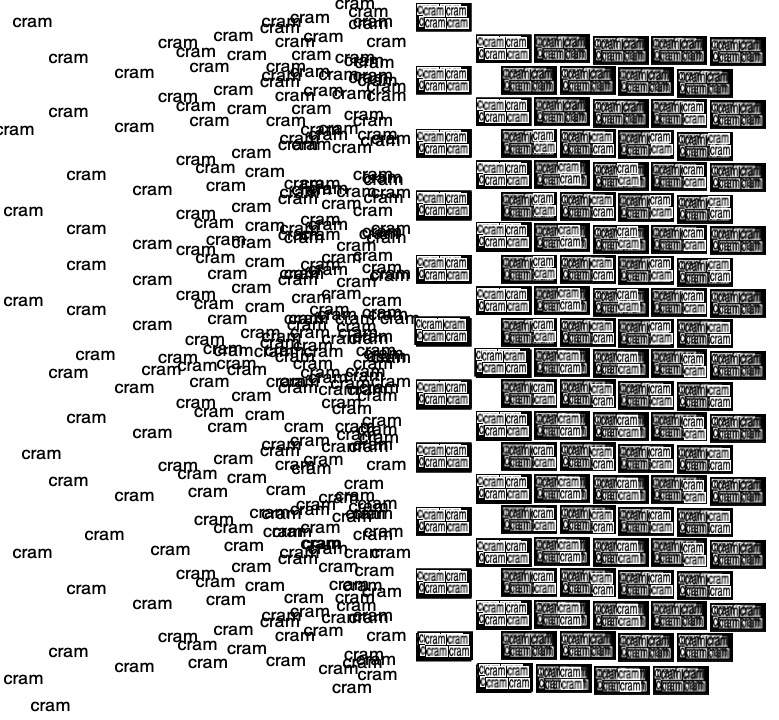
ahunter3: (Default)
= July 13, 1982 (Six Days Before) =


I’d been prescribed another dose of telephone.


There’s a phone alcove in my grandparents’ home, a recessed area in the hallway. It’s shallow, not like a room you can go into to be on the phone, but just a wooden stand built into an indentation in the wall, with a shelf for the phone to sit on, and under it, behind a hinged wooden lattice, room for phone books and note pads and pencils. I lurked there all morning and early afternoon. One thing that occurred to me was to be the one to place the call. To be less passive and less acted upon.

Yeah, but... Grandpa and Grandma’s phone bill. Not mine.

I played absent-mindedly with the rotary dial. Metal, not plastic, that dial, painted black but with shiny silvery finger holes, stiff spring, and you can sort of feel the pulses. A serious black vintage machine.

A measured ding, ding, ding chimed from Grandpa’s mantlepiece clock.

Phone finally rang.


“Your father and I have been looking at some materials and talking for some time now with some other families. And we have a proposal we’d like you to consider. Don’t answer until you’ve heard the whole thing, because we’ve put some serious thought into it. All right?”

“That’s reasonable. Okay, go ahead”

“There’s a program center just outside Houston we think looks promising, with counseling and activities to help people who are trying to get away from their drug or alcohol problem...”

I winced, but kept my silence.

“...not just about drugs, though. They look into a person’s diet and see how it fits with their metabolism and whether people are getting all the vitamins and minerals and components for making the right amino acids for mental functioning, and they do something called biofeedback so that... let’s say somebody had a hot temper, which is not a problem that you have, but someone else, biofeedback can help you choose your reactions and learn how to think more calmly before you act. Or someone who kind of acts impulsively, I think you maybe do that on occasion.”

My dad added, “It’s not just about possible problems with your brain itself. I know you’re not inclined to think there’s anything wrong with how your mind works, and I strongly suspect you’re right about that. But they also work on communication skills. Being in a group. Developing habits that make it easier to participate instead of sticking out and not fitting in. They know that some people who are struggling are those who have never become comfortable socially, and they want to help them deal with that.”

Now that sounded interesting. It’s not that I want to become one of the group-belonging, fitting-in-mentality kind of people, but I’d like to at least pick up their skillset as a second language.

“I knew it was going to be hard to sell you on the idea of a therapeutic service after what happened to you at UNM”, he continued. “Kate shouldn’t have said what she said the other day about you getting yourself kicked out. I agree they had no justifiable reason for putting you into that place, and frankly I didn’t realize they still had those medieval snake pit places, locking people up and pumping them full of drugs and not trying to help them! That’s not therapy!”

Mama said, “This isn’t like that. Their brochure shows the staff and the patients and everyone is wearing regular clothes, no medical uniforms or hospital pajamas or anything like that. It’s a very modern place where they respect patients, or clients, I’m not sure which term they use, but it says if anyone doesn’t feel they’re getting any good from it, it’s all voluntary, and you can just sign out and leave.”

“But we’d want you to give it a real try”, my Dad noted. “Don’t stalk out the first time you think there’s some policy or some person that isn’t perfect. You won’t get anything out of it unless you go in intending to get something out of it.”

“They won’t try to put you on those horrible psychiatric drugs,” my Mom added. “They don’t believe in drugging people. In fact, they want to get everyone off drugs.”

“This all sounds good”, I admitted. “Yeah, I mostly don’t think I have the problems you think I do, but it sounds like they’re willing to look at everything. I have problems that come from...you know, always being an unpopular kid, things... that I do guess get in my way now that I’m trying to reach out to people and make a difference. I don’t feel like either of you two really understand that for the last two years, the most important thing to me has been to share some of my own understandings and connect with people. I want to have a social impact. I think I have some really important insights that could help other people. Those things about growing up as a heterosexual sissy that I’ve been trying to tell you about.”

“You know”, my mom replied, “you keep obsessing about things that most people aren’t comfortable discussing. Personal, private things. When I was your age, that wasn’t an appropriate topic for conversation! Doesn’t it ever occur to you that there’s probably something unhealthy about focusing on the same things, when so much of it is all in your past anyway?”

I played with the coiled black telephone cord, sticking my fingers through the stretchy loops. “I think it’s pretty normal for a person to keep going back to the same ideas”, I said. “Maybe they’re on the verge of a breakthrough, like a deeper understanding. I bet if you could listen in to a person’s brain you’d find that they return to a lot of the same stuff and keep digging into it.”

I closed my eyes for a moment and rubbed them. Rubbed at memories and visions that lurked perpetually behind my eyelids. I continued, “It’s been frustrating so far trying to talk to people about any of that stuff. And if I got to the point of feeling like I had any traction with that, I’d probably be less distracted from everyday things. Like getting along better with hospital staff, for instance. Yeah, since I’m not in the nursing program any more, I suppose this is a good time to give this kind of thing a try.”


————

I'm seeking feedback on my book Within the Box right here, one chapter at a time.

I'm hoping people will read it and comment on it as I go. I'm hoping that if they like it, they'll spread the word.

When I get to the end, I'll start over with the first chapter, by which point I'll no doubt have made changes.

Meanwhile, I'll keep querying lit agents, because why not? But this way I'm not postponing the experience of having readers.


—————


My first book, GenderQueer: A Story From a Different Closet, is published by Sunstone Press. It is available on Amazon and Barnes & Noble in paperback, hardback, and ebook, and as ebook only from Apple, Kobo, and directly from Sunstone Press themselves.


My second book, That Guy in Our Women's Studies Class, has also now been published by Sunstone Press. It's a sequel to GenderQueer. It is available on Amazon and on Barnes & Noble in paperback and ebook, and as ebook only from Apple, Kobo, and directly from Sunstone Press themselves.


Links to published reviews and comments are listed on my Home Page, for both published books.

———————

This DreamWidth blog is echoed on Substack and LiveJournal. Please friend/link me from any of those environments on which you have an account.

————————


Index of all Blog Posts
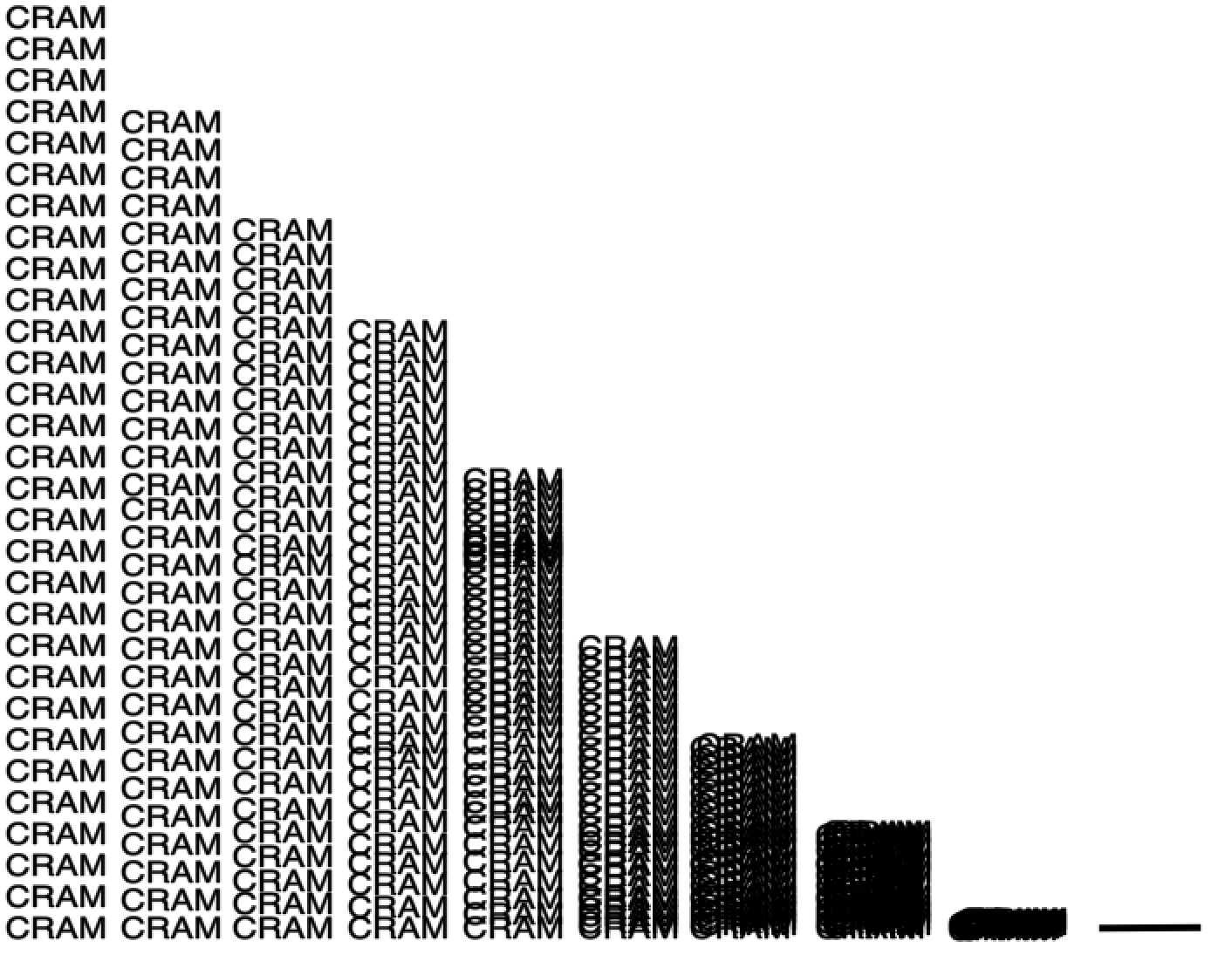
ahunter3: (Default)
= July 10, 1982 (Nine Days Before) =


I sighed and trudged yet again down the Athens General Hospital corridor, my still-unfamiliar stethoscope sliding around where I’d looped it around my uniform collar. Cardiac monitors dinged and glucose IV admin machines beeped from rooms on either side of the hallway. Plastic pill cup in hand, I knocked politely on the door of Room 337, two patient beds, part of my current rotation assignment. Hearing no answer, I stepped in once more and approached the bed on the right. James Samperson. Age 87, diabetic, renal failure, multiple amputee due to circulation shutdown, do not resuscitate order on file. Prescriptions in his chart for Lasix and Digoxin and Lopressor and a few other such medical substances, none of which I’d managed to get him to swallow on my previous visit. Antiseptic whiff of Betadine overlaying a nasty undersmell of terminal organic rot.

“Mr. Samperson?”, I said, peering around the edge of the plastic ceiling-hung privacy curtain. Mr. Samperson hadn’t budged since I’d been here before, still glaring into the empty hospital air above his bed sheets, his dentureless lips pouting. He didn’t acknowledge my presence, let alone confirm his identity, so as per protocols I once again turned the plastic arm band on his wrist to a position where I could read what was printed there. Yep, still him.

I’d thought of attempting to discuss his predicament with him, but the nursing supervisors don’t like us to bring up death and dying if the patient hasn’t done so first. And coming from me, a 23 year old white male nursing student in good health, it could come across as absurd and pretentious: what could I possibly know about how it is for him?

“Mr. Samperson, your doctor prescribed the medications in this cup. And it’s my responsibility to bring them to you and explain what they’re for or answer any questions you’ve got...”

I stepped closer, into his space, watching his face. I spoke more quietly, “Will you take your medications? However you want to do this. I can give them to you one at a time, or all together... I have some of this applesauce, if that makes it easier to go down...?”

Lips compressed into a tight frown, Mr. James Samperson jerked his head an inch to the side, away from me. Then back, and repeat. *Uh uh. No.*


* * *


“I *did* try again. He’s refusing. He’s not incompetent so we can’t make him. It’s not going to make any difference in his outcome. He’s dying. He knows it, his doctor knows it, we know it. It says so in his charts. This floor is where he’s been put to live his last days, and his dignity is all he’s got. He doesn’t want to take the pills.”

Ms. Thompson, my nursing instructor, did a long exhale and stared at me. She snatched the pill cup from my hands and aimed the leading point of her nursing cap in a directional jerk, a familiar signal to follow her back down the hall. She entered 337 and chirped, “Mr. Samperson? Good afternoon, hon. Okay, we’re just going to swallow some pills, all right sweetie? This won’t take but a moment.” She pushed a finger past his tightened lips while pressing the edge of the plastic cup. His mouth opened and Ms. Thompson’s wrist tipped. In went the capsules. “Now let’s drink a little water, dear, so those won’t stick in your throat.” She poured a splash and he swallowed convulsively. “That’s good. Now you can get back to resting and we won’t bother you for awhile.” She looked over at my face. The message on hers was pretty plain: *See, now was that so hard?* “Now you need to get his bed sores treated and give him a bath and get some food into him. You saw what I did.”

“It’s not right to treat him like he’s a child. I’m not comfortable making him do things once he’s refused.”

“Well”, she said, “that’s going to be a problem.”


= July 11, 1982 (Eight Days Before) =


I pressed down on the wet brown mass of tea leaves with the back of the spoon. Additional rivulets of coppery brown concentrated tea ran down through the strainer and into the waiting glass pitcher. I’ve known some people who would wince if they saw me doing this, claiming it was making the brew bitter, but Grandma and Grandpa had been parents during the Great Depression and this was how they wanted it done. You have to squeeze things and get more out of them.

I placed the tea pitcher on the dining table. “Can I do anything else?”

Grandma shook her head. “You go sit down and relax. There ain’t nothin’ else until these sweet potatoes get done. I’m just about to put some of those turnip greens on the stove to reheat and this kitchen don’t have room for more than one person.”

So I went back into the living room to hang out with Grandpa. He was eased back in the broad comfortable blond leather chair that had *always* been his chair, Grandpa’s chair, as far back as I could remember. He was resting now, but had just come in from mowing the lawn about ten minutes ago. Something he officially had no business doing, not since his electrolytes got all messed up and he’d had to be hospitalized. His balance and his strength were still impaired and might never recover, and in theory I was here to take care of him, not just to be a freeloader living in their home. But Grandpa had decided that the handle of the lawnmower was about the same height as the grip of his walker, and would hold him up just fine while he pushed it around the yard.

Grandpa gave me a cheerful nod. He wasn’t a person easily discouraged, not that he’d argue with anyone but you’d turn your back for a moment and he’d be out mowing the lawn. It’s kind of hard to fault a 76 year old diabetic who’d rather behave like he was still alive and kicking than accept limitations.

“How was that? You feel okay?”, I asked him.

“Tolerably well”, he stated. “It’s nice out. And how’re you doing yourself?”

I gave a brief answer that skimmed over the complexity of that particular situation and sat back on the living room couch. Or, as my grandparents would refer to it, the settee.

I’m comfortable with companionable silence or conversation, but after a moment Grandpa leaned forward, rose, and switched on the television and it responded immediately with the cash-register dings and applause of *The Price is Right* so after a gameshow question or two I put on headphones and cued up some Rimsky-Korsakov to drown out the noise.


The phone rang. I didn’t hear it right away over the strains of classical music. Grandma answered it and after a couple minutes called out to me. “Derek, it’s Kate, wanting to talk to you.” ‘Kate’ meaning my mom. Her daughter. I knew what this was about. Okay, let’s get this over with. I accepted the sturdy black Bell Telephone receiver Grandma was offering me.

“Hi, Mama.”

“Hi. Well...? Have you heard anything from them?”

“Yeah. They’re suspending me from the nursing program. Ms. Thompson says if it were up to her, they’d see about letting me finish my clinical rotation at a different hospital, but her colleagues see me as not enough of a team player.”

My Dad’s voice broke in. “You don’t know how sorry I am to hear this. I thought this was working for you, that for once you were going to finish something you had started and get on with your life. Now here we are again, and I just don’t know what to do with you at this point.” I visualized him on the other extension, probably the one in the bedroom while my Mom held the wall phone while seated in the kitchen. Parents with a mission to perform.

“I wish you’d never gotten involved with those people doing drugs”, my Mom sighed. “You used to be such a good student, and so responsible. Now I’m afraid you’ve damaged yourself to the point you can’t do anything any more.”

“That’s unfair! I told you what happened! I do fine in the classroom. I’ve got nearly perfect grades. And my patients like me, Ms. O’Neill used me as an example when she was discussing how to do the daily care, and my chart notes too, even Ms. Dixon says they’re detailed and clear and professional. The only problem is the same as before, I’m not comfortable treating patients like they don’t have any say-so about themselves. Last time it was a woman on postpartum who didn’t want a male nurse examining her episiotomy incision. Both times the nursing instructor said it’s part of the job, so just do it. Well, maybe it’s better to know going in, that I don’t want a job where I push people around!”

“I understand that”, Daddy replied, “but you have to find something! You can’t turn your nose up at everything and say it’s not for you! You’re 23 years old now. Do you realize that when I was that age, I was married and you’d already been born? I was taking on adult responsibility, and you need to do the same!”

Mama chimed in, “We’ve... we keep financing you for school. We paid for you to go to University of Mississippi and you dropped out. We paid for you to go to UNM even though it’s not the school we thought was best for you, and you got yourself kicked out. Now you’re suspended from the nursing program. It’s getting expensive and we’re not exactly getting any return on our investment!”


“That’s not fair either!”, I said, exhaling heavily. “I finished the auto mechanics school, and did my best to get jobs and support myself when I got out. And I didn’t ‘get myself kicked out’ at UNM. They had no right to sign me into that place, I hadn’t done anything to hurt anyone or threaten anyone, it was all a misunderstanding and it wasn’t my fault!”

“Nothing ever is, is it?”

Daddy interceded. “I don’t think it’s productive to talk about blame and fault, that’s not the point. We need to think about what’s next. We’re not giving up on you but we can’t just keep repeating the same things that didn’t work the first time and expecting different results.”

Mama said, “Mother says you’re a real help around the house and you’ve been taking care of your Grandpa a lot better than the home attendants ever did, so you’re pulling your weight, and I’m glad you’re there with them, they need you. But we were so hopeful that you’d turn this into an opportunity and that nursing would suit you. We love you and we want what’s best for you. We’re just frustrated because we don’t know what that is.”


————

I'm seeking feedback on my book Within the Box right here, one chapter at a time.

I'm hoping people will read it and comment on it as I go. I'm hoping that if they like it, they'll spread the word.

When I get to the end, I'll start over with the first chapter, by which point I'll no doubt have made changes.

Meanwhile, I'll keep querying lit agents, because why not? But this way I'm not postponing the experience of having readers.


—————


My first book, GenderQueer: A Story From a Different Closet, is published by Sunstone Press. It is available on Amazon and Barnes & Noble in paperback, hardback, and ebook, and as ebook only from Apple, Kobo, and directly from Sunstone Press themselves.


My second book, That Guy in Our Women's Studies Class, has also now been published by Sunstone Press. It's a sequel to GenderQueer. It is available on Amazon and on Barnes & Noble in paperback and ebook, and as ebook only from Apple, Kobo, and directly from Sunstone Press themselves.


Links to published reviews and comments are listed on my Home Page, for both published books.

———————

This DreamWidth blog is echoed on Substack and LiveJournal. Please friend/link me from any of those environments on which you have an account.

————————


Index of all Blog Posts

ahunter3: (Default)
I really like my current work-in-progress book, Within the Box. It's another autobiographical narrative: in 1982, Derek is a femme, one of the males who is more like one of the girls. Derek's worried parents are putting him into a fancy rehab facility, the kind of place where high-end psychiatrists try to reprogram people — but this time the shrinks may be biting into more than they know how to chew.

Within the Box is a psychological suspense tale. The reader is invited along to wonder who is right, and whether the institution is benign or awful, whether Derek is arrogant and stubborn or bravely resistant.


I had that particular experience and I wrote about it, and in my writing I wove all the concerns and intentions that I had at the time.

I believe it is entertaining.

I also believe it is a very good mirror into the experiences of a person that the lit agents haven't mapped as a perspective they should support. No one else has said it yet, not like that. It overlaps with stuff they've heard of and know about, but it keeps making sudden turns, usually without signalling.

"Publish it" is still the boilerplate first-tier response to "how do I get folks to read my book?" But how?? I've sent out 652 query letters to lit agents about it and have scarcely received anything warmer than a form-letter rejection in reply.

For my first book, GenderQueer: A Story From a Different Closet, I sent out 1474 queries before giving up on lit agents and switching to querying small publishers. Eventually landed a contract with hybrid publisher Sunstone Press.

Going with a hybrid publisher meant it was up to me to inform the rest of the world that these books existed. To promote and publicize them. Sunstone Press had no budget for doing that. I thought I could — I hired an experienced publicist, I bought ads in major newspapers and bought a ream of internet ads; my publicist got me speaking engagements and discussion panel appearances; I emailed libraries, making the case for them acquiring copies of my books; I blanketed organizations and associations whose purpose tied in with the themes of my book. I spent roughly $50,000 on it.

Dozens of people bought my book.

I think I'm going to publish Within the Box right here, one chapter at a time.

I'm hoping people will read it and comment on it as I go. I'm hoping that if they like it, they'll spread the word.

When I get to the end, I'll start over with the first chapter, by which point I'll no doubt have made changes.

Meanwhile, I'll keep querying lit agents, because why not? But this way I'm not postponing the experience of having readers.


—————


My first book, GenderQueer: A Story From a Different Closet, is published by Sunstone Press. It is available on Amazon and Barnes & Noble in paperback, hardback, and ebook, and as ebook only from Apple, Kobo, and directly from Sunstone Press themselves.


My second book, That Guy in Our Women's Studies Class, has also now been published by Sunstone Press. It's a sequel to GenderQueer. It is available on Amazon and on Barnes & Noble in paperback and ebook, and as ebook only from Apple, Kobo, and directly from Sunstone Press themselves.

I am still querying my third book, Within the Box, and seeking advance readers for reviews and feedback. It is set in a psychiatric/rehab facility and is focused on self-determination and identity. Chronologically, it fits between the events in GenderQueer and those described in Guy in Women's Studies; unlike the other two, it is narrowly focused on events in a one-month timeframe and is more of a suspense thriller, although like the other two is also a nonfiction memoir. Contact me if you're interested.


Links to published reviews and comments are listed on my Home Page, for both published books.

———————

This DreamWidth blog is echoed on Substack and LiveJournal. Please friend/link me from any of those environments on which you have an account.

————————


Index of all Blog Posts
ahunter3: (Default)
In the querying of my third book, a new record has been set, and I suspect it will not be broken.

I received a canned rejection letter ("I'm sorry, but your project does not sound like a fit for me at this time...").

Date I sent the query: 7/4/2023
Date I got the response: 1/7/2026
Interval between: 918 days (2 years, 6 months, and 3 days)


:: shakes head ::


Why would you bother to send a reply to a query that's been backburnered that long if you're only going to send a standard form rejection letter? I would expect at least a "Dear Author, my admin assistant found your vintage-2023 query letter where it had accidentally been transferred to our Deeds and Property Management inbox. I want you to know we did give it serious, if belated, consideration, but I don't think it's a project I could sign on for", or "Dear Author, I have been recovering from the consequences of a head-on collision that left me in a whole-body cast for years, and I'm only now catching up on my querying inbox..." or something?!?

The usual advice I've seen is "If you haven't received a reply within 3 months of sending a query, that's a pass". Lots of lit agents only reply if they are interested. So yes, of course I'd marked it as "NoReply 3Mos" and was no longer treating it as an outstanding query.

----

I still work on the book. Recently, I marked two places in my manuscript where I told my readers about something that was occurring in that timeframe, but didn't provide the dialog and interactions -- what we call "telling, not showing". And I made a note to myself: "If these are important to the story, do these as real scenes; if they aren't, get rid of these references!"

I decided in both cases to develop them. The first one in particular appealed to me as something the book would benefit from actually having: I had stated that in my day-to-day interactions with the other rehab patients, I occasionally made fun of certain behaviors in ways that some of them found offensive.

I decided I wanted that, to show myself not only opening up to them but also caring enough about their feelings that it would make me feel embarrassed and apologetic if I offended them.

The other "throwaway line" was where I made passing reference to an uneventful psychodrama session involving one of the women I was kind of developing an interest in. Well, if I was becoming interested in her, why wouldn't I have found the psychodrama session immersive? Yeah, I should either write the scene or discard the mention. I decided to write it and it does flesh out here character more to have that in there.


So, some people might have the attitude "You should not be querying your book until it is FINISHED." Well, David Gilmour has continued to perform music that Pink Floyd was performing back when I was in high school, and he occasionally finds new ways of presenting the material, small changed in how he expresses this or that section. That doesn't mean it wasn't fit for musical consumption back in 1976. I doubt I'll quit modifying the book until it does get published, but it has long since become a good book that's well worth reading for entertainment and enlightenment and good shivers.


—————


My first book, GenderQueer: A Story From a Different Closet, is published by Sunstone Press. It is available on Amazon and Barnes & Noble in paperback, hardback, and ebook, and as ebook only from Apple, Kobo, and directly from Sunstone Press themselves.


My second book, That Guy in Our Women's Studies Class, has also now been published by Sunstone Press. It's a sequel to GenderQueer. It is available on Amazon and on Barnes & Noble in paperback and ebook, and as ebook only from Apple, Kobo, and directly from Sunstone Press themselves.

I have started querying my third book, Within the Box, and I'm still seeking advance readers for reviews and feedback. It is set in a psychiatric/rehab facility and is focused on self-determination and identity. Chronologically, it fits between the events in GenderQueer and those described in Guy in Women's Studies; unlike the other two, it is narrowly focused on events in a one-month timeframe and is more of a suspense thriller, although like the other two is also a nonfiction memoir. Contact me if you're interested.


Links to published reviews and comments are listed on my Home Page, for both published books.

———————

This DreamWidth blog is echoed on LiveJournal and WordPress. Please friend/link me from any of those environments on which you have an account.

————————


Index of all Blog Posts
ahunter3: (Default)
Hello! I'm an author; I have an unpublished book, WITHIN THE BOX, linked here as a PDF: https://www.genderkitten.com/WS4/ah3files2/Within%20the%20Box,%20by%20Allan%20D.%20Hunter%202.4.16.pdf.


I have two published books published under my name, Allan D. Hunter.


I have a blog site, https://ahunter3.dreamwidth.org/, in which I discussed my ongoing intentions and processes in writing all three of these books, and there are a few reviews and comments on the internet, but I'm not famous or anything.


I would like to hear your predictions about how WITHIN THE BOX would be perceived, how people would react to the storyline and characters and plot (it's a memoir but I'm marketing it as a book that tells a story as entertaining and compelling as any fiction). I would like you to construct some reviews the way you think people would write them.
ahunter3: (Default)
Last week, I participated in Berkshire Choral International's rendition of "Considering Matthew Shepard" by Craig Hella Johnson at the National Cathedral in Washington. This was the culminating event after months of at-home practive (memorizing my part in five momements and becoming familiar with the remaining ones) and a very intense week of rehearsal with the other 150-someodd vocalists.

As you might expect, this piece drew an abundance of LGBTQ singers. (Not that there don't tend to be a significant number at any given BCI event, but not to this extent).

Because of the current political climate, and because transgender people in particular are being targeted for political victimization, I for once put my self-immersion on hold and made a real attempt to blend, both as a vocalist and as part of the LGBTQIA+ rainbow, instead of putting a lot of effort into representing my specific identity as a genderqueer male femme. And although I didn't feel perceived and recognized for exactly who I am within that coalition rainbow, I felt embraced welcomed and, for once, part of things, part of the community.

We put on a hell of a good concert. Our conductor, Jeffrey Benson, was exceptional, and polished us as a group to precision detail.


Maybe the sense of affinity and belongingness touched me and started some deep-inside-the-head process, I don't know, but I've been experiencing emotional extremes a lot in the days following Berkshires. I went for one of my 25-mile walk excursions and dredged up a lot of misery and foreboding and feelings of defeat, and chewed on them until they dissolved. Later, I sat on our porch steps and smoked some weed and contemplated for an hour or so, and at the end of that I found something pathetic and vulnerable lurking in the dark corners of my head -- the attitude that it's only okay that I am the way I am if I change the world. That effecting social change, successfully establishing this gender identity I've claimed as my own, makes that identity okay.

That is a bit short of real self-acceptance, if you see what I mean. It has to be okay to be who I am and not change the world.

Not that I don't intend to continue to try, mind you. What that unhealthy attitude really indicates is that I'm not as insulated from caring about what other people think of me as I tend to believe I am. I think I'm pretty immune from being hurt or troubled by what this acquaintance or that stranger thinks of me, but in the aggregate I still want to explain myself to the rest of my society and get a nod of understanding and acceptance. OK, I don't think that's necessarily an unhealthy desire. But when it leads to thinking badly of myself, thinking I'm not trying hard enough, or making harshly critical assessments of my skills for engaging with people, that's essentially kicking myself over and over for not being a successful activist. It's basically punishing myself for being who I am without changing the world.


—————


My first book, GenderQueer: A Story From a Different Closet, is published by Sunstone Press. It is available on Amazon and Barnes & Noble in paperback, hardback, and ebook, and as ebook only from Apple, Kobo, and directly from Sunstone Press themselves.


My second book, That Guy in Our Women's Studies Class, has also now been published by Sunstone Press. It's a sequel to GenderQueer. It is available on Amazon and on Barnes & Noble in paperback and ebook, and as ebook only from Apple, Kobo, and directly from Sunstone Press themselves.

I have started querying my third book, Within the Box, and I'm still seeking advance readers for reviews and feedback. It is set in a psychiatric/rehab facility and is focused on self-determination and identity. Chronologically, it fits between the events in GenderQueer and those described in Guy in Women's Studies; unlike the other two, it is narrowly focused on events in a one-month timeframe and is more of a suspense thriller, although like the other two is also a nonfiction memoir. Contact me if you're interested.


Links to published reviews and comments are listed on my Home Page, for both published books.

———————

This DreamWidth blog is echoed on LiveJournal and WordPress. Please friend/link me from any of those environments on which you have an account.

————————


Index of all Blog Posts
ahunter3: (Default)
I'm still querying literary agents in hopes of hooking my book up with a commercial publisher. I don't blog very often because querying has been so dismal and discouraging. I mean, it always is -- I hated the querying process for my first book, GenderQueer -- but at least for GenderQueer I got some encouraging comments, and an occasional nibble.

It hasn't been that way for Within the Box. Nothing but a long string of form-letter rejections and one-sentence "not for me thanks" turndown replies.

Until this week.


Opened my email and found this:


Hi! First, let me apologize for taking SO long to get to your submission. Once I started reading, I couldn't put it down! That being said, I shared it with my interns as well. We had a few discussions about it and talked about the strengths and areas for improvement. Ultimately, I feel it's just not ready, and would need substantial work for me to find it ready to submit to publishers. Therefore, I'm afraid it's a pass for me. I'm so sorry it's not better news. But I want to share feedback, and hope you find it helpful.

First, I love the main character and his voice. You've done a wonderful job at drawing in the reader. It's a compelling story, but the beginning and end both felt too short and not fleshed out enough. The middle section felt too long. I had questions about the parents and their motivates, too. I'd want more closure with them. Your secondary characters were a great addition, the people in the hospital with him. However, I'd like more insight on the head of the hospital who really seemed to have it in for your protagonist. Was he just evil, or a narcissist, did he have any redeeming characteristics that would make him more 3-dimensional? Also, what is the ultimate point of the story? Is it primarily to show the journey of your protagonist, or perhaps a slice of life to show the problems with mental health facilities? I'm not clear as to the reason for the story, mainly because the ending was rushed. (I loved that he made his way in the world though. That made me so happy!)

I want you to know this pass was a very difficult decision. I'm a fan of your writing and welcome any future submissions from you! You're very talented, and I appreciate you letting me read this story. I hope my decision does not discourage you from continuing to work on it and send it out. It shows real promise!!! Take care and please keep in touch.


I really needed this. Some sign that what I wrote just might, maybe, have appeal within the mainstream book market. Some sign that it's worth continuing to fish and see if I can get a bite.

This came from Tina Schwartz of the Purcell Agency. I'd originally sent a query in to Bonnie Swanson there, and instead of receiving a reply from her, this came in from her colleague Tina Schwartz:


Dear Allan,
I have read your query for WITHIN THE BOX and found it interesting. Please follow the instructions below to upload your full manuscript. I'm looking forward to reading it.


That was encouraging at the time -- a request for the full manuscript is rare and always a hopeful sign -- but then time ticked on and I figured if she's seen something she liked I'd have heard about it. Many lit agents don't bother sending rejection letters at all. "If you haven't heard anything in a few months consider it a turndown". My assumption is 3 months.

I'd rather have someone take their time and get to my material when they can, if they engage with it like this!


—————


My first book, GenderQueer: A Story From a Different Closet, is published by Sunstone Press. It is available on Amazon and Barnes & Noble in paperback, hardback, and ebook, and as ebook only from Apple, Kobo, and directly from Sunstone Press themselves.


My second book, That Guy in Our Women's Studies Class, has also now been published by Sunstone Press. It's a sequel to GenderQueer. It is available on Amazon and on Barnes & Noble in paperback and ebook, and as ebook only from Apple, Kobo, and directly from Sunstone Press themselves. Hardback versions to follow, stay tuned for details.


My third book is in post-first-draft corrections and is being circulated to beta readers for feedback. Provisionally title Within the Box. Contact me if you're interested.


Links to published reviews and comments are listed on my Home Page, for both published books.

———————

This DreamWidth blog is echoed on LiveJournal and WordPress. Please friend/link me from any of those environments on which you have an account.

————————


Index of all Blog Posts
ahunter3: (Default)
I've been window-shopping for a paid-for editing service, getting a set of experienced editor-eyes on my manuscript with a focus on making the leading edge of it, in particular -- the first XX pages that get requested as sample, in other words -- as marketshiny as the storyline will accommodate in hopes of getting more nibbles from lit agents.

I reached out to some editors I had prior contact with from one of my previous books. One of them got back to me after requesting and receiving my current synopsis and 1st 3 chapters, about 45 pages.

"There was enough in the storyline to keep me turning pages", I'm told. "I was sufficiently invested in wanting to see what happens next. And the solid quality of your writing kept me going. My biggest concern is that I didn't find myself reacting well to your main character. He comes across as distant and cold, someone who doesn't care about any of the people he's in contact with, and as a result I found myself pretty apathetic about the character."

insert comic timing pause

It's autobiographical.


Well, that's consistent with the story I'm telling, actually. At one point within the book I relate the tale of trying to transition from childhood to adulthood in the employment zone, only to find that...


Basically, they don’t like me. Teachers mostly did. Classmates mostly didn’t. And now that I’m an adult, employers mostly don’t. Why?


... and as a child I'd had a similar bad time of it in school, not that I never managed to have any friends but that I was so widely hated:


Jan [my sister] didn’t easily fit in everywhere. Whenever we moved, or changed school systems, I think she had to work at it to make new friends, get people to accept her, avoid being the kid that other people leave out or make fun of. I think she put some effort into tucking in any odd corners so people couldn’t see. Popularity was important to her; I don’t mean she was super popular, most popular girl in the class or anything like that, but popular enough. Accepted. But that wasn’t an option for me. I wasn’t merely some kid who was seen by some as having something about them that was a little different. I was the kid that everyone in the school heard about from the other kids before they ever saw me. I had a reputation that had stuff that people made up about me added to what was already there, and being stared at was not something I was going to be able to avoid. I remember kids from other classrooms bringing their friends with them to point me out through the open classroom door, you know, ‘See, over there, that’s him’. So I have a lifetime of training that’s made it pretty much invisible to me.


So my main character -- i.e., me -- comes across as uncaring:


Mark Raybourne [my assigned individual counselor] wants me to think about whether my tendency to not give a shit whether or not other people approve of my behavior is a tendency that has unhealthy components. Okay. You can consider it a defense mechanism, but you can also consider it the necessary attitude if you’re going to move forward. I couldn’t afford to care. I was under attack. I had to believe in me. They had to be wrong. Yes, that installs the worry that this is a coping mechanism. Yes, I’ve worried about that. That maybe my default assumption that I was right to believe in me and reject them as wrong was...incorrect, and I...for some reason...deserved this.


I definitely would not describe my main character as more tolerant than their classmates. I wasn't. I was judgmental all through the worst years, elementary and junior high school, just outnumbered very badly, so yes their intolerance was pretty nasty to deal with, but I wasn't a better person or anything.

So my main character is problematic: pushy and with a practiced "I can't afford to care, it hurts too much" attitude towards whether or not other people like me.


The editor who gave me the feedback may still have a good point. First let's make a split between whether the person I was as the main character is not a good main character or it's my painting of that me, how I'm written as that character, isn't a good representation of me. If I want to stick to the factual (regardless of whether I'm marketing it as fiction or as nonfiction) I can't retroactively fix who I was, even if that character needs fixing. But giving the editor a lot of leeway to make a reasonable point here, yeah, my book could be difficult to market because I haven't represented the character as well as I should.

To my way of thinking, it's a selling point that my book actually addresses so many of the editor's critical comments. The editor hasn't read the whole book and would not have seen that yet. I mean, yeah, they're totally relevant issues, but I've attempted to include them in the book. Trust me, I'm narcissistic. I may be vain and self-immersed, but I promise you it's not an unexamined life.


—————


My first book, GenderQueer: A Story From a Different Closet, is published by Sunstone Press. It is available on Amazon and Barnes & Noble in paperback, hardback, and ebook, and as ebook only from Apple, Kobo, and directly from Sunstone Press themselves.


My second book, That Guy in Our Women's Studies Class, has also now been published by Sunstone Press. It's a sequel to GenderQueer. It is available on Amazon and on Barnes & Noble in paperback and ebook, and as ebook only from Apple, Kobo, and directly from Sunstone Press themselves.

I have started querying my third book, Within the Box, and I'm still seeking advance readers for reviews and feedback. It is set in a psychiatric/rehab facility and is focused on self-determination and identity. Chronologically, it fits between the events in GenderQueer and those described in Guy in Women's Studies; unlike the other two, it is narrowly focused on events in a one-month timeframe and is more of a suspense thriller, although like the other two is also a nonfiction memoir. Contact me if you're interested.


Links to published reviews and comments are listed on my Home Page, for both published books.

———————

This DreamWidth blog is echoed on LiveJournal and WordPress. Please friend/link me from any of those environments on which you have an account.

————————


Index of all Blog Posts

Nibble

Jan. 30th, 2025 12:42 am
ahunter3: (Default)
Current stats on the querying process for Within the Box:

total queries to lit agencies: 498
rejections: 401
outstanding: 97

Until a couple days ago I was getting bogged down by the unrelenting turndowns, with nobody expressing any interest. The closest I had come to a positive response was an agent saying "This looks interesting but I don't handle this genre so I'm forwarding this to So-and-So my colleague". From whom I never heard a subsequent peep.

But over the weekend I opened a reply email that said "I really like your premise, but the writing didn't send me quite as much as I'd hoped. I can't offer you representation but please feel welcome to requery me if you revise it".

That may not seem like the kind of reply that would send me over the proverbial moon, but let me unpack it a little.

Lit agents might have been uniformly turning me down because they knew the market well enough to conclude that no publisher was going to go for a book about that stuff, at least not from someone who isn't already a market draw. Which would mean I couldn't fix the problem, nobody was going to agent this book. But she was saying she liked the premise.

Lit agents also might have been turning me down because of my lack of a Platform. It's something that they want from their nonfiction authors, that you already have a built-in audience, a following likely to buy your book. It's not something that they tend to look for from a fiction author (although they still care very much whether you've been previously published, and by whom, and how well it sold). I think it's stupid that they grade autobiographical memoirs by the same criteria that they evaluate a stock market portfolio management guide or a chronicle of the people who settled a Pacific island. Memoirs ought to be split into Famous Person Memoirs and Representative Memoirs and Expertise Memoirs and Memoirs That Entertain. If people have heard of the author, it's a Famous Person Memoir, and agents can sell those the easiest. Representative Memoirs are where you don't need to know the specific individual so much as you need to know about the Group, the collective cluster of people associated with some known social phenomenon — soldiers of the Vietnam war, the first women elected to American political office, the software developers of the first wave of widespread personal computer use, these are all identities where if you knew the book was about what that was like, you might want to read it. Expertise Memoirs come from really qualified experts in their field, publishing nonfiction for them is like gettting published in a relevant academic journal. You need to show the publisher that you are regarded as someone who really knows your topic. That leaves Memoirs That Entertain where it's a well-told story that just happens to be nonfiction, it's a person's actual experience, but it's entertaining whether despite or because it's true. I mean, that's how I'd divide Memoir up, but of course I'm not a lit agent.


My book falls into Representative Memoirs, using my system, because I write as a genderqueer sissy male coming out in the early 1980s. It's not about Allan Hunter, it's about the social experiences that eventually yielded words like "genderqueer". But it's also a Memoir That Entertains. It's a fun story, it's as good as a movie, it has drama and tension and characters and dialog and concepts and danger and escape and an unreliable narrator and a reason to question what is or is not actually happening here.


So...::coughs:: the query that elicited this reply was the FICTION version of my query letter, pitching it as a psychological suspense tale, to a lit agent who doesn't handle any nonfiction.

"I really like your premise, but the writing didn't send me quite as much as I'd hoped. I can't offer you representation but please feel welcome to requery me if you revise it". ——> as a work of fiction; she's saying that about it as if it were a work of fiction. The nonfiction agents have shown no interest. Oh, and I would guess that 90% of my queries describe the book as memoir, nonfiction.


The thing about positioning this book as a work of fiction is that it puts me up against fiction authors. They get to structure plot for the purpose of making a good story. I'm competing with them while trying to relay what actually happened when I was in the hospital that I alias as Elk Meadow in the book. I'm not going to say that I didn't take any liberties when writing Within the Box. I'm describing hour-to-hour events that actually took place in 1982. Of course I'm painting specific renderings of things I only remember in the general, same as when we're in conversation and I'm telling you what I said to someone yesterday in the drug store or the supermarket, we all know I'm not claiming to recall each literal word of each sentence, but I was like this, yeah? It's an honest memoir in that sense. I did move a couple of events because they helped paint people's character even if that's not when (or even to whom) they happened.

A lot of fiction authors are drawing from real-life events. "Write what you know", we're advised, and so of course fiction authors are people who draw inspiration from events and experiences they've been there for.

We could dive into a whole philosophical treatise about what is fiction and what is nonfiction, but that's actually not my focus — I'd be happy to market it either way. Rubyfruit Jungle didn't lose any impact because it was positioned as a work of fiction.

Third major observation: the lit agent's instructions for querying had said to upload a query letter, the first ten pages, your "about the author" self-summary, word count, ever been repped by an agent before, have you ever been published, synopsis, one sentence pitch, descrip of potential audience, and a short list of comparable books. Most of those I have a limited ability to modify, especially given that I'm not a great author of short little "bumper sticker" summaries. But it says that "the writing didn't send me quite as much as I'd hoped" is after reading ten pages.

I have reached out to three different significant contacts to ask for recommendations for an editor. I want to consult someone who can help me shape it as a work of fiction. Especially the first 50 pages (the max that they tend to request shorter than the whole manuscript), the first 30 within that, the first 20, first 15, first 10. First 5, god help me, and lately a tiny handful of them only want to see the first 3.

I'm nervous about going up against fiction authors. This is their craft, and I just picked it up the best I could because I think I have stuff to tell. I just have to hope that I've told my own story really well.

And I'm off to get some help with that.


Those of you who write: do you spend a lot of time wondering how to position what you've written? What to call it?

Do you like selling it, the experience of marketing what you've written, however you go about it? I'm thinking more in terms of "do you feel utterly inept at it and have no sense of how to go about doing it", rather than "do you feel like you've prostituted your skillset and you feel exploited" but really however your thinking is on it, the experience of getting the publication world to opt in?


—————


My first book, GenderQueer: A Story From a Different Closet, is published by Sunstone Press. It is available on Amazon and Barnes & Noble in paperback, hardback, and ebook, and as ebook only from Apple, Kobo, and directly from Sunstone Press themselves.


My second book, That Guy in Our Women's Studies Class, has also now been published by Sunstone Press. It's a sequel to GenderQueer. It is available on Amazon and on Barnes & Noble in paperback and ebook, and as ebook only from Apple, Kobo, and directly from Sunstone Press themselves.

I have started querying my third book, Within the Box, and I'm still seeking advance readers for reviews and feedback. It is set in a psychiatric/rehab facility and is focused on self-determination and identity. Chronologically, it fits between the events in GenderQueer and those described in Guy in Women's Studies; unlike the other two, it is narrowly focused on events in a one-month timeframe and is more of a suspense thriller, although like the other two is also a nonfiction memoir. Contact me if you're interested.


Links to published reviews and comments are listed on my Home Page, for both published books.

———————

This DreamWidth blog is echoed on LiveJournal and WordPress. Please friend/link me from any of those environments on which you have an account.

————————


Index of all Blog Posts
ahunter3: (Default)
Blogging: A Self-Evaluation


communication, frustration, grandiosity, platform, literary agent, listening

I started blogging in earnest about 12 years ago, mostly because I kept running into the idea that all nonfiction authors have to have a "platform" if they want to snag a literary agent. By "platform" they mean a pre-existing audience already following what the author has to say whever it is that they say it.

But it was kind of contagious, this process of making these diaryesque entries, entries which rather quickly morphed into classroom lesson materials, with me playing Dr. Hunter, PhD in women's and gender studies, you know? I mean, that was the stuff I wanted to talk to the world about via the mechanism of my book, and presumably the lit agents not only want you to have a following, they want you to have a relevant following. Well, that was my thinking at the time at any rate. Besides, I wanted to put a lot of that stuff into words, to practice expressing it, to get it down. And ideally to reach out to people with it, share these concepts.

It turns out that people don't flock to a blog where they are lectured at, at least not unless they get a grade and some class credit for doing it. I had a handful of people originally, reading my blog posts, mostly other bloggers. But some of them drifted away from blogging and those who are still around have mostly stopped commenting and interacting.

Well, I'm also in a Facebook group someone set up, and the person who set it up keeps asking questions instead of providing lectures, and she gets much better interactive discussions going on.

I think it's been meaningful and appropriate that I've slowed my own blogging pace this last year. It's not that I'm giving up on this "communicate with other people" thing so much as thinking "this isn't working" and step enough back from what I've been doing to see what I'm doing wrong.

One thing I should try is asking questions. Creating space for the people who read what I've written to talk about what they think about various things.

I really am a self-immersed person, and here in this case I think it isn't so much that I haven't been caring what anyone else might think but that I somehow expected that me making a bunch of declarative expository intellectual content and flinging it out there was how you started a conversation. I thought people would talk back at me. But I didn't bother to invite anyone, just sort of assumed they'd show up!

I still have a lot to learn about this "communicate with other people" thing. I feel like I'm awful at it. Or I guess I'm reaching for a lot more than I'm able to grasp. Anyway, I've never been satisfied with how well I do it.


—————


My first book, GenderQueer: A Story From a Different Closet, is published by Sunstone Press. It is available on Amazon and Barnes & Noble in paperback, hardback, and ebook, and as ebook only from Apple, Kobo, and directly from Sunstone Press themselves.


My second book, That Guy in Our Women's Studies Class, has also now been published by Sunstone Press. It's a sequel to GenderQueer. It is available on Amazon and on Barnes & Noble in paperback and ebook, and as ebook only from Apple, Kobo, and directly from Sunstone Press themselves.

I am still querying my third book, Within the Box, and I'm still seeking readers for reviews and feedback. I think of it as a jam session at this point: sure I'd like to get it published, just like a musician wants to get their song recorded, but in the mean time the musician's still gonna want to play it for people. Same for me as an author! So come read what I've written! It is set in a psychiatric/rehab facility and is focused on self-determination and identity. Chronologically, it fits between the events in GenderQueer and those described in Guy in Women's Studies; unlike the other two, it is narrowly focused on events in a one-month timeframe and is more of a suspense thriller, although like the other two is also a nonfiction memoir. Contact me if you're interested.


Links to published reviews and comments are listed on my Home Page, for both published books.

———————

This DreamWidth blog is echoed on LiveJournal and WordPress. Please friend/link me from any of those environments on which you have an account.

————————


Index of all Blog Posts
ahunter3: (Default)
Coming to Terms With It


I don't have the power to make the things I say and write be important to you. To be relevant and capable of explaining a lot of things that you were concerned about.

I think that a lot of the things I say and write are important and powerfully explanatory, but for the most part I don't have what you could call a following. It's an interesting word, following. When I was a juvenile, it had a kind of stuffy "congregation of the church" official kind of vibe, but now I'm more likely to associate it with TikTok and FaceBook and YouTube, places where you get other people to follow you and listen to your videos or read your posts.

I am frustrated because of this. Obviously I want the experience of being regarded as important. Let's be upfront about that, I definitely have an ego invested in this. It would be fun and would feel really satisfying to wow people. Musicians have that, the desire to really affect an audience, to have so many people tuned into you. Oh, and incidentally I am a freaking musician and I think more people should be listening to my music because once again I think I'm better than the miniscule size of my audience ever gave testimony to.

So in terms of desire and me putting focus on it, I'm definitely craving the experience of feeling important and connected to a set of listeners.


Please treat all the preceding paragraphs as Item 1. The observed fact that I crave that kind of attention. You're invited to be cynical. Children do that, but we don't necessarily give them attention because we agree with them that their ideas and opinions and perspectives are important. We often regard it as immature, but cute and some of us regard it as selfish if it persists in adults where it is a lot less cute. So here's Flouncy Derek, getting all frustrated because he's not getting the attention he craves.

Back to me not having the power to make the things I say and write be important to you. Communication is a competitive market. I'm not doing well in that market. I don't seem to have the skillset. I don't think that should be terribly amazing to anyone, insofar as I've been trying to explain myself as a marginalized outsider person. I don't know how to do the communication-market magic stuff. It's not that I am cynical myself about the process of selling what one has to say — I could admire the trait of being good at it, and I can definitely envy it — but my frustration does have me wondering if there aren't better ways to share stuff that you really want other people to pay attention to. Making it available to them is easy; but how do you make them aware of its availability when they don't already know what it is you're selling?

Say a shorter version of it, they say. Give me a Synopsis. Explain everything in one page. Please summarize what it is that your book says in one sentence. Give me the bumper sticker version.

This limits what one can say. I just applied to enter a writing contest.

(Admittedly Cynical Reason: claim another award in the text of my query letter)

I see a contest where nonfiction is eligible and what you submit is a full 1st 50 pages. After so many contests where they want you to submit 500 words, a page, 275 words, 100 words, etc, this appeals as a chance to communicate more. But on page two of the application, they ask for a Synopsis, 100 words maximum.

The usual description of Synopsis is "boil down your book into a single page; include all spoilers", which is a horrendously reductionistic request, but to do a 100 page version utterly defeated me. I wrote


1982. Derek, nursing student, is kicked out of program, refused to pressure patients to take medications. Parents think he has drug/alcohol problem. Sell him on idea of fancy rehab and life-coach facility.

Derek's genderqueer (sissy femme), wants facility to make him better speaker.

They're pushy, tell him he's in denial. Other residents initially resent him for being disruptive.

They're slickly manipulative, he's stubborn, they treat his femininity as pathological, he tries to get something out of the program but they're headed for a collision.

Want real synopsis? I need more than 100 words, I don't do bumper stickers.


That's a hundred freaking words.

There has to be a better communications process. I have my author's group where people read from what they've written and give each other feedback. What I visualize is something hierarchical but not in the sense of bosses and employees or captains and lieutenants and sergeants, but instead a hierarchy of communication itself, with little groups that meet often being a part of somewhat larger groups that meet a bit less often and concepts that get a lot of endorsement or generate interesting conversations are more likely to be brought forward into the larger group. Or something like that. I mean, I have more specific ideas but if we were to do this, I'd need to listen to other people's ideas pretty early on.

Call the preceding paragraph Item 2, if you will. This notion of a communications funnel. Local smallgroup passing on that which communicates in a meaningful sense to the next larger group.


That notion, Item 2 (even if it's not how our markets are really structured) suggests that I should select topics and insights that aren't mine or, even if they are, precede the stuff I'm attempting to publish, and trace back to some point where it's easier to make sense to people.

Circling back to Item 1, the ego stuff, ...I really don't know if it's how people in the publishing industry thing of it, but to me, it's like a conversation, very awkwardly conducted:

Author: I have stuff to say

Market: Who can you sell it to?

Author: That's what I was going to ask you, dammit!


Back to my lack of skillset.

Then somehow I'm supposed to leverage my sense of connection to those people so as to find the people to whom I could say more without losing them or failing to make sense to them.

God I hate this. I hate this process. Flouncy Derek: You people are hard to make sense to, I have stuff to say, I'm not very good at what I set out to do, and I'm very frustrated!!


Item 3: Acceptance


I once said — as recounted in the very damn book I'm trying to sell — that I think the Serenity Prayer should be inverted, like so:


God, grant me the wisdom to know the difference between the things I cannot change and the things that I can, the courage to change the things I can change, and when all else fails, the serenity to accept the things I cannot change.


I'm 65. Retirement age.

I actually retired once already from pushing this specific gender agenda. This whole notion that I had something important to say. I put it down when I left college, grad school, 1992. Not toting a PhD. Not having made a mark in academia with my ideas. Then I picked it all back up in the mid-2000s, intially just thinking and processing and rereading the things I'd written.

So I picked it back up and (again) pushed and spoke and wrote. (And yeah, again got all full of self-worship for how exquisitely damn GOOD it was).

But once again it hasn't caught much fire.

I don't want to use "acceptance" as an excuse for not trying any more. But if I'm going to keep doing this, I need some protection from how utterly frustrating and demoralizing the experience is.


Oh, as long as we're on the topic, here's the shit I usually append to the bottom of my blog posts. What is there about self-marketing that I don't get? It's like shouting into a void.
—————


My first book, GenderQueer: A Story From a Different Closet, is published by Sunstone Press. It is available on Amazon and Barnes & Noble in paperback, hardback, and ebook, and as ebook only from Apple, Kobo, and directly from Sunstone Press themselves.


My second book, That Guy in Our Women's Studies Class, has also now been published by Sunstone Press. It's a sequel to GenderQueer. It is available on Amazon and on Barnes & Noble in paperback and ebook, and as ebook only from Apple, Kobo, and directly from Sunstone Press themselves.

I have started querying my third book, Within the Box, and I'm still seeking advance readers for reviews and feedback. It is set in a psychiatric/rehab facility and is focused on self-determination and identity. Chronologically, it fits between the events in GenderQueer and those described in Guy in Women's Studies; unlike the other two, it is narrowly focused on events in a one-month timeframe and is more of a suspense thriller, although like the other two is also a nonfiction memoir. Contact me if you're interested.


Links to published reviews and comments are listed on my Home Page, for both published books.

———————

This DreamWidth blog is echoed on LiveJournal and WordPress. Please friend/link me from any of those environments on which you have an account.

————————


Index of all Blog Posts
ahunter3: (Default)
I appeared as a guest lecturer at the Psychology of Gender course at SUNY College at Old Westbury on Monday, reading selections from my various books and articles and stitching them together with introductory bits.

I had a really good audience! Another Women's & Gender Studies course came as well so the room was well-packed. They were very quiet and attentive and asked good questions at the end.

Class was around 60 or 70 percent traditional-aged students (people in their 20s) and the rest ranged up to mid-50s. The older students were more inclined to ask questions at the end but it was nice to see the younger ones really listening, not scrolling their phones or staring off into space or fidgeting. I may not have a flair for promotion and publicity but once I can get my material in front of people, it resonates!

A very pleasant break from querying.


—————


My first book, GenderQueer: A Story From a Different Closet, is published by Sunstone Press. It is available on Amazon and Barnes & Noble in paperback, hardback, and ebook, and as ebook only from Apple, Kobo, and directly from Sunstone Press themselves.


My second book, That Guy in Our Women's Studies Class, has also now been published by Sunstone Press. It's a sequel to GenderQueer. It is available on Amazon and on Barnes & Noble in paperback and ebook, and as ebook only from Apple, Kobo, and directly from Sunstone Press themselves.

I have started querying my third book, Within the Box, and I'm still seeking advance readers for reviews and feedback. It is set in a psychiatric/rehab facility and is focused on self-determination and identity. Chronologically, it fits between the events in GenderQueer and those described in Guy in Women's Studies; unlike the other two, it is narrowly focused on events in a one-month timeframe and is more of a suspense thriller, although like the other two is also a nonfiction memoir. Contact me if you're interested.


Links to published reviews and comments are listed on my Home Page, for both published books.

———————

This DreamWidth blog is echoed on LiveJournal and WordPress. Please friend/link me from any of those environments on which you have an account.

————————


Index of all Blog Posts
ahunter3: (Default)


—————


My first book, GenderQueer: A Story From a Different Closet, is published by Sunstone Press. It is available on Amazon and Barnes & Noble in paperback, hardback, and ebook, and as ebook only from Apple, Kobo, and directly from Sunstone Press themselves.


My second book, That Guy in Our Women's Studies Class, has also now been published by Sunstone Press. It's a sequel to GenderQueer. It is available on Amazon and on Barnes & Noble in paperback and ebook, and as ebook only from Apple, Kobo, and directly from Sunstone Press themselves.

I have started querying my third book, Within the Box, and I'm still seeking advance readers for reviews and feedback. It is set in a psychiatric/rehab facility and is focused on self-determination and identity. Chronologically, it fits between the events in GenderQueer and those described in Guy in Women's Studies; unlike the other two, it is narrowly focused on events in a one-month timeframe and is more of a suspense thriller, although like the other two is also a nonfiction memoir. Contact me if you're interested.


Links to published reviews and comments are listed on my Home Page, for both published books.

———————

This DreamWidth blog is echoed on LiveJournal and WordPress. Please friend/link me from any of those environments on which you have an account.

————————


Index of all Blog Posts
ahunter3: (Default)
When I came out 44 years ago, I set out to follow in the footsteps of the social change agents I admired. I had a real and personal cause. Not that I'd been looking for one, I'd mostly been drawn towards social justice movements to distract me from dwelling on my personal life dissatisfactions so much; it felt good to care about someone else, and to feel drawn in to a righteous commitment, you know?


I have obsessed a lot lately with the sense of not having made any impact despite 44 years of making the attempt. I do occasionally see that this isn't an entirely fair appraisal --

a) I may have been there in various times and places where I was supportive of someone else's self-investigations or where I was perceived as some kind of role model, and then someone *else* went on to make the social ripples I never made; and

b) There's a lot of aggregate accomplishment, of changing the overall zeitgeist of our society about gender, where the same forces that made it possible for me to develop my sense of identity drew strength from me and others like me and it made an environment where yet more people could come forth with variant identities

c) Certainly, having a vision of a differently configured society has been a great and wonderful shield, protecting and insulating me from internalizing and worrying about the views of the society I actually live in. And I have a powerful distrust of Missions where one sacrifices one's personal life and personal happiness for some Higher Cause that's all about bringing about a world that one never actually gets to.


How much of it is ego? Wanting the satisfaction of having an impact, of watching the ripples become waves? Certainly some of it and probably a lot. I like to sit at the piano and smash big powerful chords down loudly. I like to craft sentences and paragraphs that make ideas resonate with people. No doubt about it, and no room to pretend otherwise. I want to rock my world.

At least some of it is a sense of responsibility and even duty, though. I promised myself as a child that if I ever figure out why it's like this, why my presence seems to bring out the mean streak in other people and they mock me and express contempt instead of receiving me warmly, I would fix it, not just for me but for anyone else like me. Whether it's a misstep that I made in understanding life and people or something that the rest of the people have gotten wrong about or whatever, that it has to be fixed.

And that's the part that is reluctant to let me rest and keeps prodding me to try to Do Something, to figure out a new and different approach that might finally work.


—————


My first book, GenderQueer: A Story From a Different Closet, is published by Sunstone Press. It is available on Amazon and Barnes & Noble in paperback, hardback, and ebook, and as ebook only from Apple, Kobo, and directly from Sunstone Press themselves.


My second book, That Guy in Our Women's Studies Class, has also now been published by Sunstone Press. It's a sequel to GenderQueer. It is available on Amazon and on Barnes & Noble in paperback and ebook, and as ebook only from Apple, Kobo, and directly from Sunstone Press themselves.

I have started querying my third book, Within the Box, and I'm still seeking advance readers for reviews and feedback. It is set in a psychiatric/rehab facility and is focused on self-determination and identity. Chronologically, it fits between the events in GenderQueer and those described in Guy in Women's Studies; unlike the other two, it is narrowly focused on events in a one-month timeframe and is more of a suspense thriller, although like the other two is also a nonfiction memoir. Contact me if you're interested.


Links to published reviews and comments are listed on my Home Page, for both published books.

———————

This DreamWidth blog is echoed on LiveJournal and WordPress. Please friend/link me from any of those environments on which you have an account.

————————


Index of all Blog Posts
ahunter3: (Default)
Back when I was hawking my first book, GenderQueer (at that time with working title The Story of Q), I decided after a long run of querying it as a memoir with no serious nibbles to try selling it as a work of fiction. "Consider Rubyfruit Jungle", I'd say to people. "It's categorized as fiction but it's pretty clearly Rita Mae Brown's own story. Or my colleague Noretta Koertge's book Who Was that Masked Woman?, featuring a main character named Tretona Getroek -- pretty obviously herself. So why not?"

So I'm again at that stage. Within the Box is a well-written entertaining tale (I have sufficient feedback to feel confident saying so). But nary a single lit agent has expressed interest.

Here are the pro and con arguments for repositioning it as a work of fiction:

IN FAVOR: Most lit agencies and agents divide the lit world up into fiction and nonfiction, and memoirs fall into the latter. And nonfiction authors are constantly being told "you need to have a platform, an already-existing audience of people who pay attention to what you say in your field". Which makes a certain amount of sense if your nonfiction piece is about climate change, or the boom and bust cycles of the stock market, or the extensive searches for remnant populations of ivory-billed woodpeckers and thylacines and other presumed-extinct animals.

And I suppose it also makes sense if your nonfiction offering is a memoir about your experience as an already-known public figure. Where that's going to be one of its selling points, that it's about a person that folks have heard of in the news or whatever.

But Within the Box is only incidentally a true story. Nobody has heard of me and hence nobody is going to buy my book because of who I am, but it's an engrossing suspense tale.

Lots of fiction authors write engrossing suspense tales and they aren't instructed to describe their platform of reputation and expertise that makes them qualified to write what they wrote.


AGAINST: I always figured a strong selling point of one's actual story is that it is, in fact, someone's actual story, that it actually happened. And I'd be tossing that away in order to market the book as fiction.

My companion-partner mentioned that if I query it as fiction, I run the risk of some lit agent wanting to change parts of the plot, insert an element into the storyline that didn't really happen or change the personality and behavior of myself as main character. Which I suppose is true, but it's not like I'm forced to go along with that.

The truth is, I have no freaking idea what makes my book more likely to appeal to these folks. I've done my reading and I've participated in message boards for authors and I'm still in the dark.

But since I can keep querying it as nonfiction while also querying it as fiction to other lit agents, I see no downside to having a go at it.


Current querying stats:

TOTAL queries to lit agents: 307
Rejections: 250
Outstanding: 56


—————


My first book, GenderQueer: A Story From a Different Closet, is published by Sunstone Press. It is available on Amazon and Barnes & Noble in paperback, hardback, and ebook, and as ebook only from Apple, Kobo, and directly from Sunstone Press themselves.


My second book, That Guy in Our Women's Studies Class, has also now been published by Sunstone Press. It's a sequel to GenderQueer. It is available on Amazon and on Barnes & Noble in paperback and ebook, and as ebook only from Apple, Kobo, and directly from Sunstone Press themselves.

I have started querying my third book, Within the Box, and I'm still seeking advance readers for reviews and feedback. It is set in a psychiatric/rehab facility and is focused on self-determination and identity. Chronologically, it fits between the events in GenderQueer and those described in Guy in Women's Studies; unlike the other two, it is narrowly focused on events in a one-month timeframe and is more of a suspense thriller, although like the other two is also a nonfiction memoir. Contact me if you're interested.


Links to published reviews and comments are listed on my Home Page, for both published books.

———————

This DreamWidth blog is echoed on LiveJournal and WordPress. Please friend/link me from any of those environments on which you have an account.

————————


Index of all Blog Posts

Acquiring

Jul. 29th, 2024 02:01 am
ahunter3: (Default)
As a child I thought it a good thing that there should be a system. Like patriotism but nonspecific, just the general notion that there was an ideal way to do things and we were those who had sought it and acquired it. Or were in the process of acquiring it.

Always in the process. Always there in the process, acquiring it. Not a state of being there having acquired it. The act of becoming.

March 2026

S M T W T F S
123 4567
891011121314
15161718192021
22232425262728
293031    

Most Popular Tags

Syndicate

RSS Atom

Style Credit

Page generated Mar. 7th, 2026 11:09 pm
Powered by Dreamwidth Studios